
-
Oct, Thu, 2026

Frames, Foundation and Comb: What They Do
Frames make it possible to inspect and manage a colony without dismantling the comb it lives on. Foundation can guide the bees’ comb-building, but it is the comb itself that becomes the colony’s working structure. Understanding the difference helps a new beekeeper avoid treating frames as simply identical units to count.
Frames hold removable comb
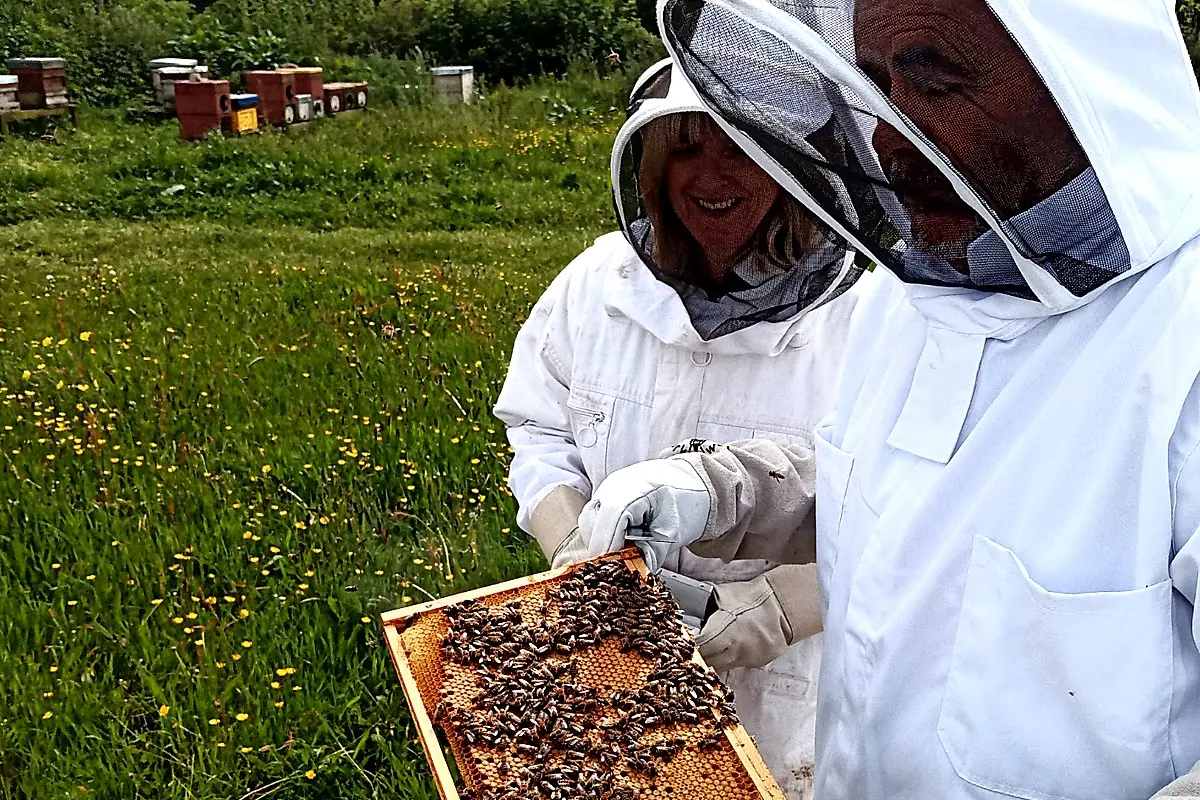
A frame is the wooden or plastic structure that holds a sheet of foundation, a starter strip, or comb built by the bees. Its dimensions must match the box and hive system being used. A shallow box needs shallow frames; a deep box needs deep frames. Frames from different hive systems are not necessarily compatible, even where their names sound similar.
The point of a movable-frame hive is that a beekeeper can lift out individual combs, examine them and return them without destroying the nest. That only works if the frames are correctly sized, spaced and handled gently. Keep them in their original order where possible: the colony has arranged its brood, food and empty space in a way that makes sense to it.
Foundation is a guide, not the comb itself
Foundation is a thin sheet, often wax or plastic, embossed with the beginnings of cell bases. It gives the bees a guide for building straight, removable worker comb. Frames can also be used with a narrow starter strip or without full foundation, allowing the bees to build their own comb.
Neither approach is automatically right for every colony or every management style. Full foundation can make it easier to obtain straight comb that is simple to inspect and extract from. Starter strips or foundationless frames need careful attention while new comb is being built, so that it remains straight and can be handled safely. Whichever you use, make sure it is suitable for the frame and for the job the comb will need to do.
Comb is the colony’s working structure
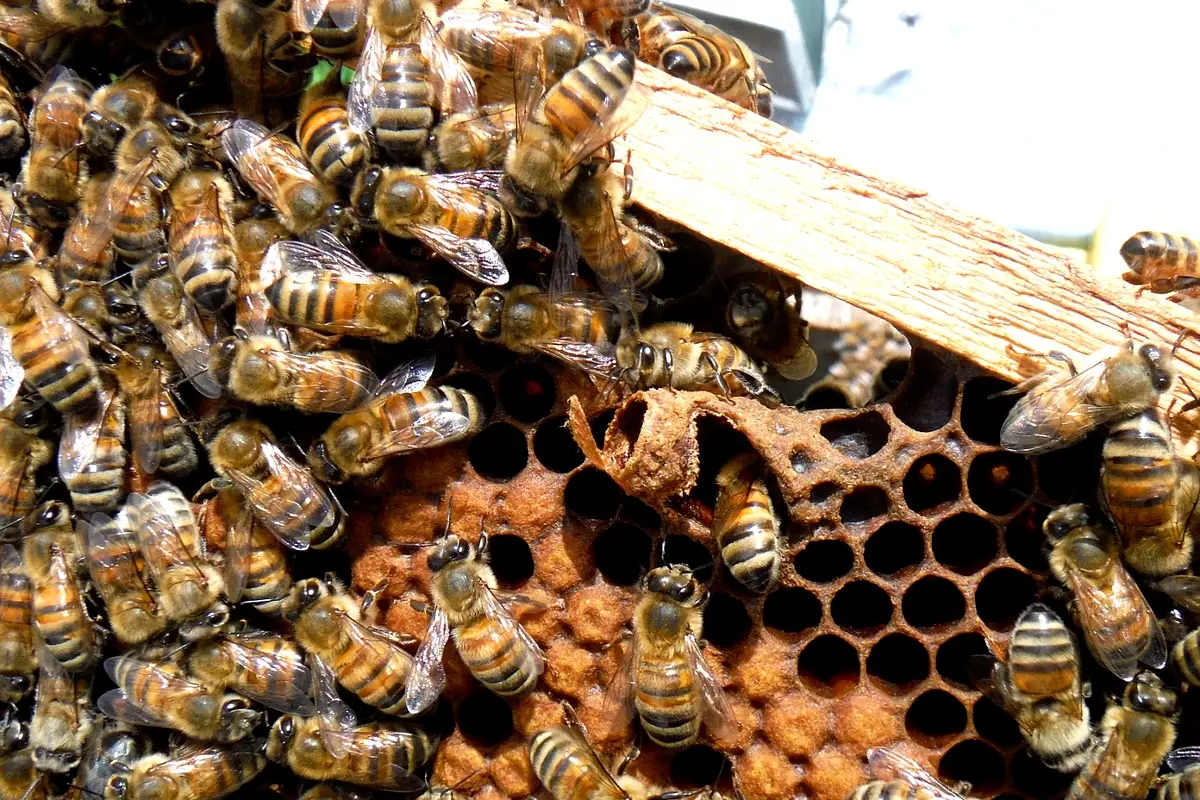
Bees use comb for brood rearing, pollen storage, nectar processing and honey storage. Those uses are often mixed together. A single frame may contain eggs and larvae in one area, capped brood in another, a band of pollen and nectar or honey around it. It is rarely as tidy as “one frame of brood” or “one frame of stores”.
When inspecting, first look for the pattern: where is the brood nest, is there enough food close to it, and does the colony have usable space? That tells you more than trying to turn every mixed frame into an exact number. With experience, you begin to recognise what you would expect to see next time and notice when a colony is moving away from that pattern.
New comb needs gentle handling
Freshly drawn comb is soft and can break or sag, particularly when it is warm or full of nectar. Keep it upright, avoid swinging it and support the frame securely. Do not force frames apart: work slowly and use the hive tool to break any propolis seal.
Comb also deserves attention when it is damaged, badly built, excessively old or no longer appropriate for the colony’s needs. Replace or remove it for a clear reason rather than following an arbitrary timetable. Any change to the comb arrangement should leave the colony with enough suitable brood space and food space for the conditions it faces.
A practical check before adding frames
Before adding a frame or box, ask what the colony needs now. A growing colony may need room to draw comb or store incoming forage; a small colony in poor weather may not be able to occupy extra space. The equipment is there to support the bees’ use of the hive, not to make the hive match a predetermined layout.
Frames and comb make a colony manageable, but they are also the record of how that colony is living. Learn to read them as a connected nest and your inspections will become more useful and less about counting.