Category Instrumental Insemination

Instrumental Insemination Equipment and Setup – An Overview

← Back to Educational Resources

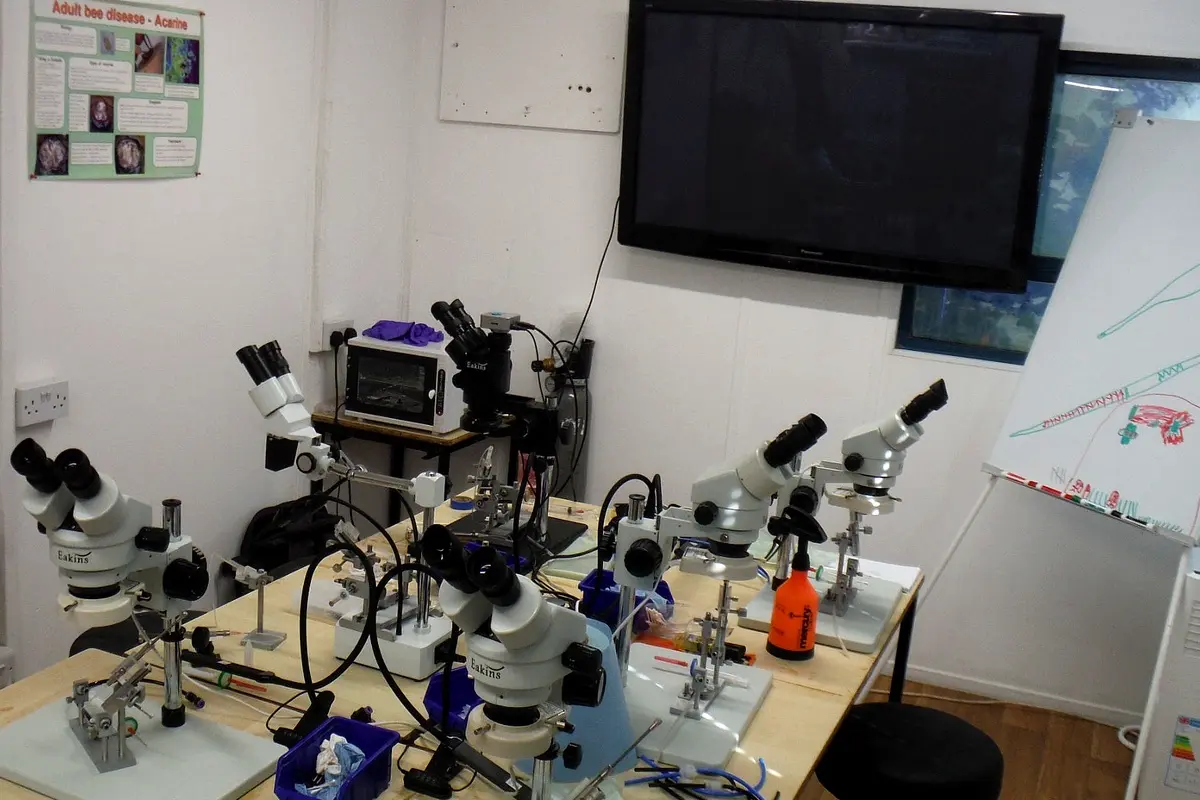
Instrumental insemination needs a purpose-built setup, but it is better understood as a working system than as a list of things to buy. Each part needs to support careful handling, clean technique and the welfare of the queens and drones involved. The right setup is one that is stable, practical to clean and suited to the breeder’s intended work.

The microscope
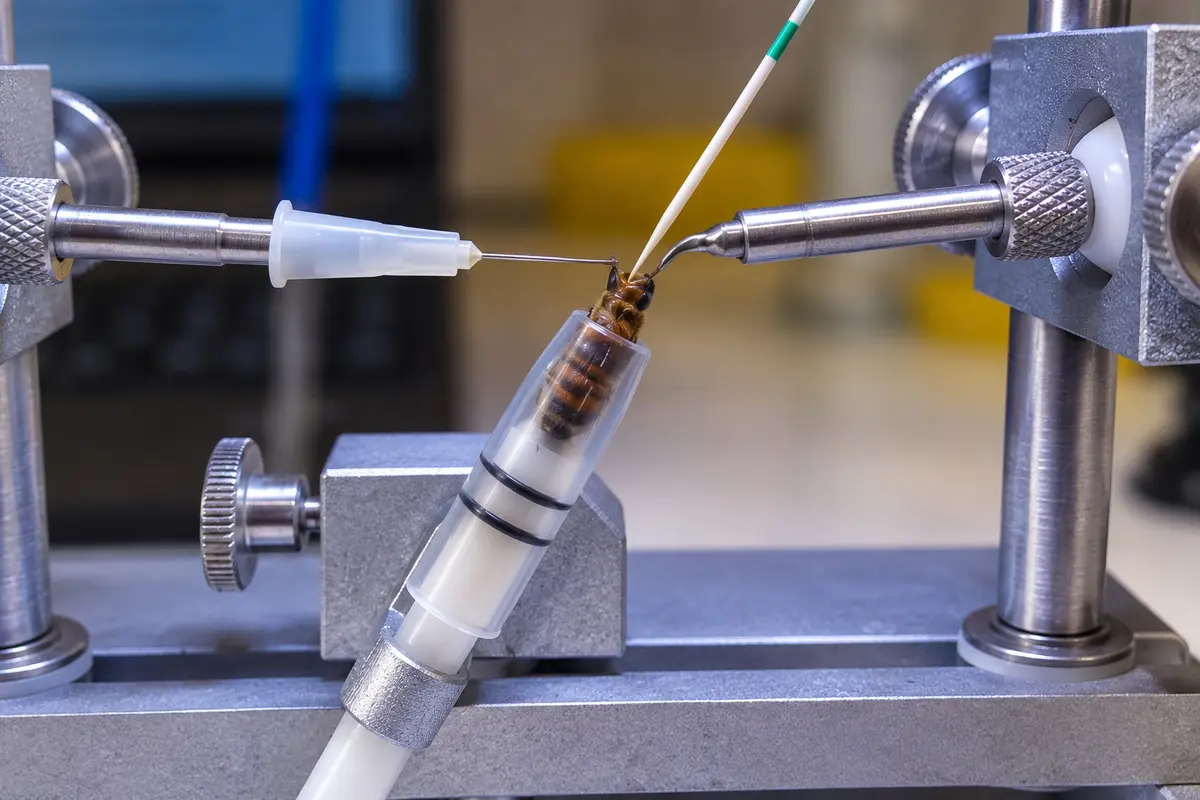
Close view of instrumental insemination equipment in use
The microscope and insemination unit support precise, controlled work.

A binocular stereo microscope gives the depth perception needed to work accurately at close range. A generous working distance is important, so that there is room to position the queen and the insemination unit beneath the optics. Variable magnification is useful because it allows the view to be adapted to the stage of the procedure.

A camera or screen can be valuable for teaching and demonstration, but it is not a replacement for the depth perception of a suitable binocular microscope when carrying out the work itself.

The insemination unit

The insemination unit holds and positions the queen and the instruments used to collect and deliver semen. There are several designs and configurations. When choosing one, practical considerations matter more than novelty: it should be stable, straightforward to clean, and use parts and consumables that can be replaced or standardised.

A unit that can be maintained properly and understood by the person using it is more useful than a complicated setup with features that do not support the breeding aim.

Gas control and handling equipment

A controlled carbon-dioxide system forms part of a normal instrumental insemination setup. It needs to be capable of gentle, controlled delivery and used as part of a properly learned procedure. Queen cages, drone cages and other handling equipment are equally important because much of the work is in preparing, holding and caring for the bees before and after the time at the microscope.

Consumables and cleanliness

Routine consumables include insemination tips, syringes, syringe fittings, saline, cotton buds and suitable cleaning materials. These are not minor details. Equipment must be cleaned before and after use so that debris does not build up and so that cleaning leaves no harmful residue on the parts that will contact bees or semen.

Keeping the workspace orderly and the equipment clean makes the procedure more repeatable and makes it easier to identify what needs attention when something does not go as expected.

Supporting the whole system

Depending on the scale and timing of the work, the wider setup may include a drone collection station, queen-holding cages, an incubator and larger cages for temporary care. These items are not automatically necessary for every breeder, but they can make it easier to plan queens, drones and aftercare as a coherent system.

Choose equipment to support competence

Buying specialist equipment is not the same as being ready to use it. Instrumental insemination depends on good bee handling, careful preparation and repeated practical experience. Start with a clear objective, a sound understanding of the process and a setup that can be kept clean and consistent. Add equipment when it solves a genuine practical need.

For most people, hands-on training is the best way to understand how the parts work together before investing in a complete setup. Learn about Bishops Bees’ Instrumental Insemination Course.

Next read: Instrumental Insemination resources
When Instrumental Insemination Is Useful

← Back to Educational Resources

Instrumental insemination is most useful when a breeder has a specific question that open mating cannot answer reliably. It gives precise control of a queen’s paternal source, but that control only has value when it supports a clear breeding aim and is followed by proper assessment of the resulting colonies.

Testing a planned pairing

A breeder may want to see what results from one known queen line paired with drones from a particular source. Instrumental insemination makes that pairing possible and repeatable. This is useful when comparing families, investigating a trait or deciding whether two lines complement each other.

The result is still one piece of evidence. Colonies need to be assessed in their own right, and promising results need to be repeated before they are treated as a dependable direction for a breeding programme.

Maintaining known parentage

When a breeder is developing or maintaining a line, knowing both sides of the mating can be important. Instrumental insemination can keep selected maternal and paternal lines connected while their daughters are evaluated. It can also make it easier to understand where a useful or unwanted characteristic may have come from.

That does not mean narrowing the breeding population without thought. Healthy, workable colonies and broad enough genetic diversity remain essential. Controlled mating should support sensible selection, not replace it.

When open mating may be enough

Open mating is often entirely appropriate. If the local drone population is suitable for the breeding aim, an open-mated queen can produce a useful colony and give valuable information about a queen line. A beekeeper can also influence open mating by raising drones from selected colonies, but this is influence rather than control: a queen still meets drones from the wider area.

There is little value in using instrumental insemination simply because it is available. If there is no clear question, no suitable source colonies, or no plan to evaluate the daughters, the additional work may not improve the breeding decision.

Situations where it adds most value

  • Testing a particular maternal and paternal combination.
  • Making breeder queens with known parentage.
  • Keeping a selected line available while it is assessed.
  • Comparing the outcomes of different planned crosses.
  • Working where open mating cannot give the required level of genetic control.

Start with the breeding objective

The first question is not “Can this queen be instrumentally inseminated?” but “What am I trying to learn or improve?” Define the traits and the source colonies, plan how the resulting queens and daughters will be assessed, then decide whether controlled mating is the right tool.

Instrumental insemination becomes worthwhile when it makes a breeding decision clearer. It is not a substitute for good colonies, careful observation or patient selection over more than one generation.

Next read: Instrumental Insemination resources
Reproductive Biology and Timing for Instrumental Insemination

Instrumental insemination works best when it follows the biology of the queen and drones rather than a fixed calendar. The equipment gives control over parentage, but it does not remove the normal biological requirements for well-developed queens, fertile drones and calm, well-provisioned colonies.

Timing is a working range, not a deadline

It is useful to plan the work from queen emergence, but no single day guarantees that a queen or drone is ready. Development temperature, genetics, nutrition, colony conditions and handling all influence the pace of maturation. Use dates to give bees enough time and to organise the work; do not treat them as proof of an individual bee’s condition.

The queen

A virgin queen continues to mature after emergence. Her reproductive system develops and her behaviour changes as she becomes capable of mating or insemination. There is no simple practical assessment that tells the beekeeper that an individual virgin queen has reached the right level of reproductive maturity. Age is therefore used as a safeguard: the aim is to allow ample time before insemination, rather than to diagnose maturity in the queen herself.

Some instrumental-insemination programmes work from about six days after emergence, based on the expectation that queens have had time to mature by then. Seven days is a cautious and useful practical point: keeping a queen a little longer gives more margin, whereas attempting insemination too early risks a poorer outcome. This is still a working range, not a guarantee; individual queens and batches will vary.

For practical queen rearing, the important preparation begins well before the insemination day: rear queens in strong, well-fed colonies; avoid unnecessary chilling or disturbance; and keep clear records of emergence, parentage and handling. A queen that is undersized, damaged or simply not developing normally is not improved by keeping to a timetable.

The drones

Drones also need time after emergence before they are useful as semen donors. In breeding work, “about 40 days from egg” is a practical midpoint for planning a supply of mature drones. It is not a biological switch: some drones may mature before or after that point, depending on their development and colony conditions. The value of the midpoint is that, when the colony has been prepared properly, there should be a sufficient number of mature drones available.

The drone calculation has a different purpose from the queen calculation. Mature drones need opportunities to fly, and as they age they are increasingly exposed to the normal risks of life outside the colony. Plan for a point at which there are ample mature drones, but do not wait so long that a large proportion of the original cohort has been lost. Build the drone plan backwards from the intended insemination period and allow a margin for weather, uneven emergence and normal colony variation.

Why mating biology still matters

Natural mating is followed by major changes in a queen’s behaviour and physiology, including reduced mating-flight behaviour and activation of reproduction. Instrumental insemination is designed to achieve fertilisation while controlling parentage, but it does not make the queen a simple container for semen. Insemination volume, semen and seminal fluid, carbon-dioxide anaesthesia and handling can all influence the queen’s subsequent reproductive response.

That is why a sound technique is more than a mechanical procedure. The queen needs appropriate recovery conditions afterwards, and her introduction and early laying should be assessed as part of the whole process.

Plan with buffers

  • Prepare drones early enough that a good supply of mature individuals is expected.
  • Use emergence dates to organise queens, while giving them a cautious margin for maturation.
  • Keep suitable nucleus colonies ready for queens before insemination takes place.
  • Expect a period of recovery and establishment before judging a queen.
  • Record departures from expectation and use them to improve the next batch.

Assess the result in the colony

Do not judge success on the day of insemination. The useful outcome is a queen that establishes, lays consistently and heads a viable colony. As with naturally mated queens, give the colony time to settle and look for a developing laying pattern over successive inspections. One early observation is information, not a final verdict.

Instrumental insemination gives breeders powerful control over the mating decision. The best results still come from working with living bees: good rearing, mature drones, careful timing, suitable colonies and patient assessment afterwards.

Related research

These links are background sources for readers who want to follow the evidence behind the topic. Putative Drone Copulation Factors Regulating Honey Bee Queen Reproduction and Health is a review article; The effects of mating and instrumental insemination on queen honey bee flight behaviour and gene expression reports original research; and The Potential of Instrumental Insemination for Sustainable Honeybee Breeding is a review of instrumental insemination in breeding.

Instrumental Insemination: What Is It For?

← Back to Educational Resources

Instrumental insemination is a way of controlling the mating of a honey bee queen. Semen is collected from selected drones and introduced to a virgin queen using specialised equipment. In honey bee breeding it is usually called instrumental insemination because the process depends on careful handling and purpose-built instruments.

It is a breeding tool, not a way to make any queen better by the procedure alone. Its value lies in making the parentage of a queen known, so that a breeding plan can be tested and developed with more confidence.

Why control mating?

With open mating, a queen mates in the air with drones from the local population. That can produce good, useful queens, but the paternal side is largely unknown. Instrumental insemination allows the breeder to choose both the queen line and the drone source.

This makes it possible to create planned crosses, keep particular lines separate while they are assessed, and compare the outcomes of different pairings. It is particularly useful when the aim is to understand inheritance, maintain a breeding population or produce breeder queens with known parentage.

What it can—and cannot—tell you

Known parentage is useful evidence, but it is not a verdict on the quality of the resulting colony. Traits such as temperament, brood viability, health and productivity still need to be assessed in colonies over time and in the conditions where they will be kept. A carefully planned mating does not remove the need to select from the colonies that result.

Nor does instrumental insemination replace open mating in ordinary beekeeping. Open-mated queens can be entirely suitable where the local drone population is appropriate for the breeding aim. The two approaches serve different purposes; the useful choice depends on what the beekeeper is trying to learn or achieve.

What the process involves

Successful instrumental insemination begins well before the insemination itself. It requires suitable virgin queens, a planned supply of mature drones, semen collection, controlled handling of queens and good care afterwards. The equipment and technique are specialised, and small details of hygiene, timing and queen care can affect the result.

For that reason, it is best approached as a complete system rather than a single procedure at a microscope. The genetics, the preparation of queens and drones, the insemination technique and the subsequent assessment of colonies all need to support the same breeding objective.

Using it with a clear breeding aim

Before choosing instrumental insemination, define what you want to improve or investigate. A sensible aim might be to test a particular pairing, preserve a line while it is evaluated, or make breeder queens with a known paternal source. Broad, healthy selection remains important: no mating method compensates for choosing poor source colonies or for overlooking the performance of their daughters.

Instrumental insemination is therefore most valuable when it is used alongside careful colony assessment and records that answer a practical question. Keep the focus on what the resulting colonies show, rather than assuming that the mating method itself guarantees an outcome.

Next read: Instrumental Insemination resources