Category Colony Management

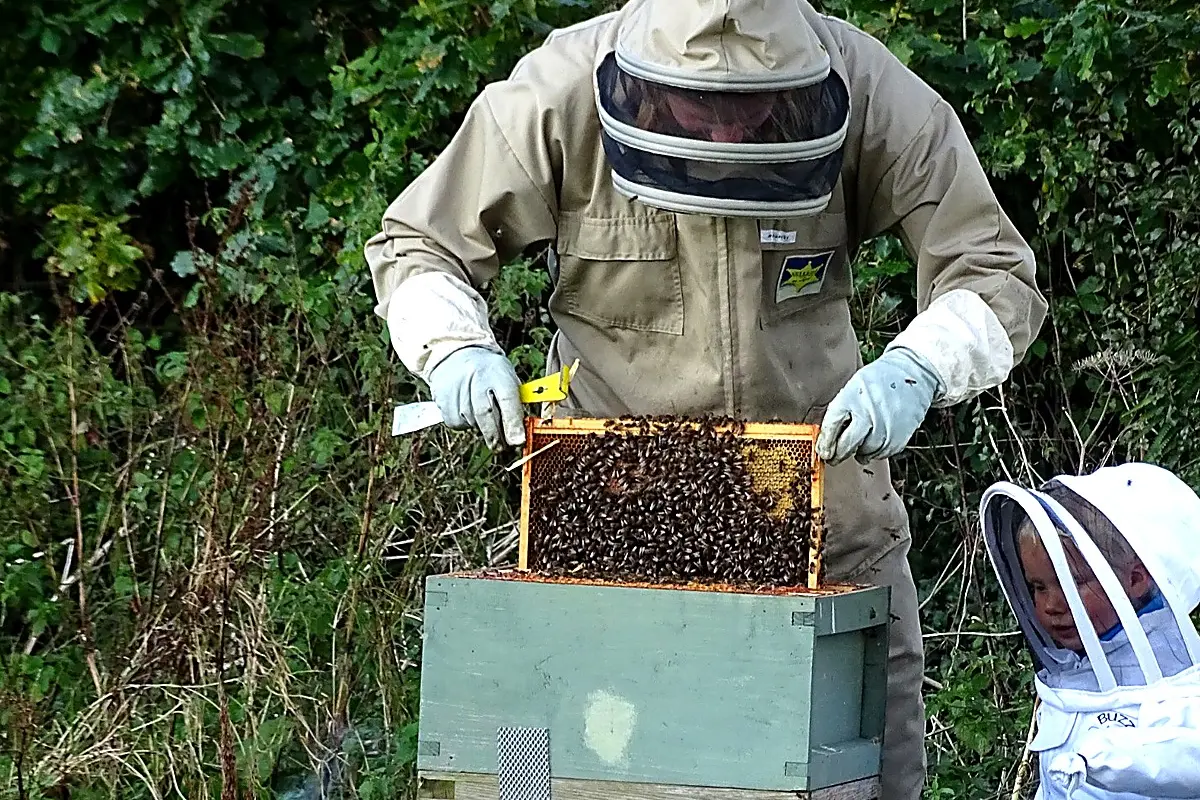
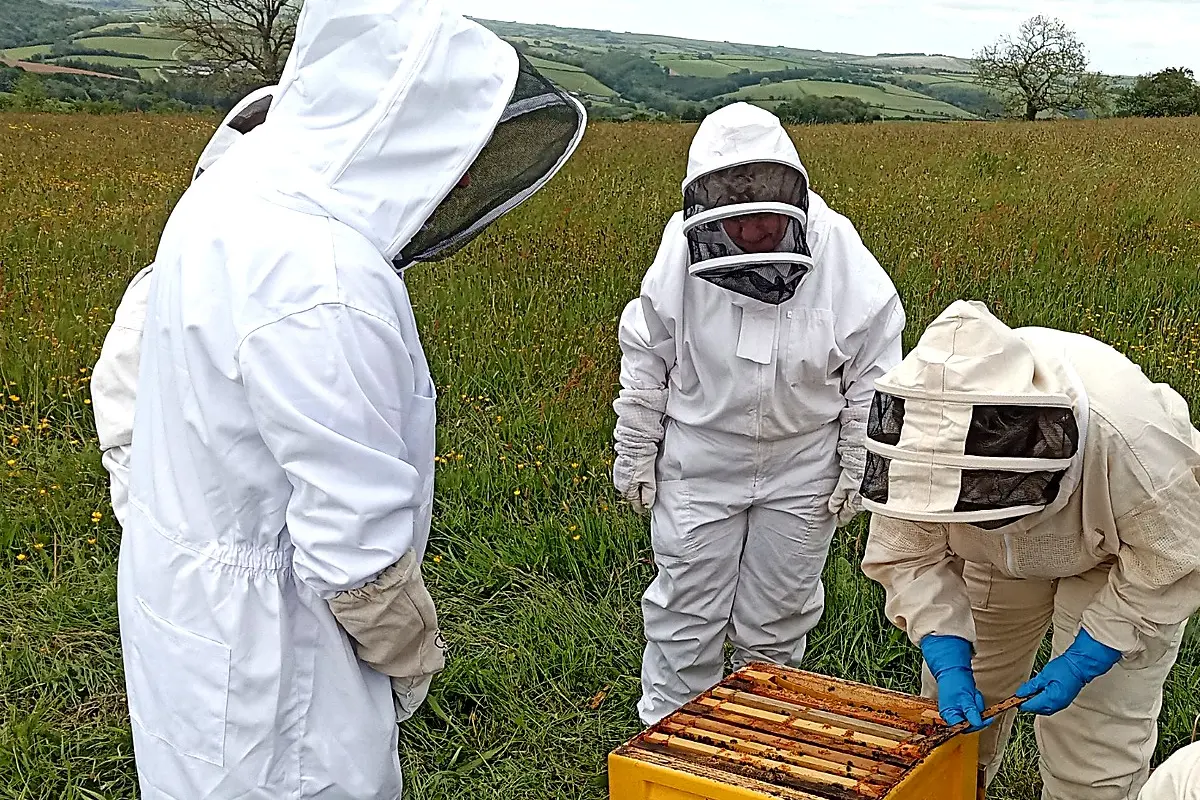
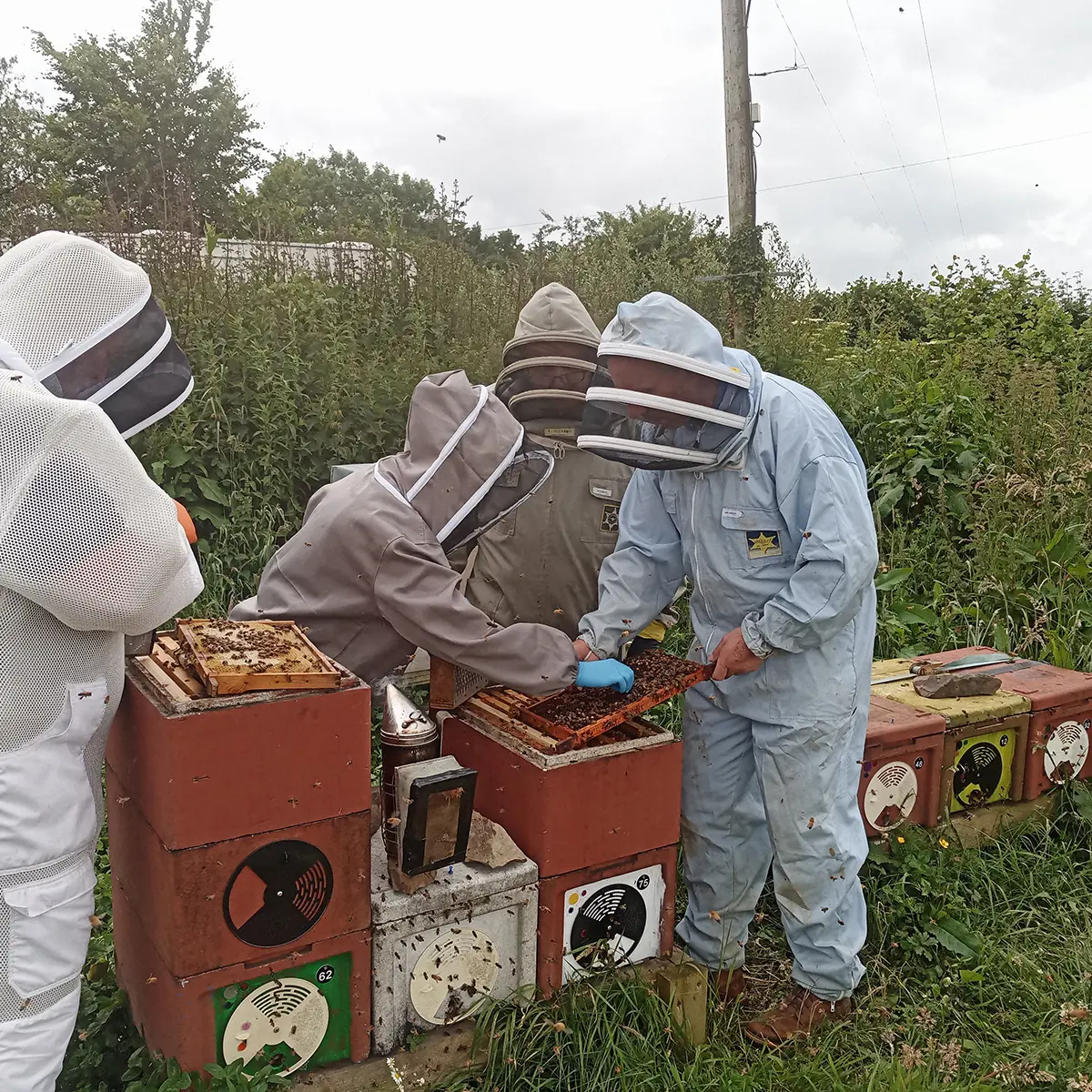
Beekeepers inspecting hive boxes
Adding Space: When and Why

Adding space is not a routine calendar task. It is a response to what a colony is doing and what it is likely to need next. The useful question is not “when do I put another box on?” but “what sort of space is becoming limited, and can this colony use more space now?”

Different kinds of space

A colony may need room to rear brood, receive and process nectar, store honey or simply move through the hive. These are related, but they are not identical. A box used for surplus honey above the brood nest is serving a different purpose from an extra brood box or a shallow box used as brood space in a brood-and-a-half arrangement.

Start by identifying the constraint. Is the brood nest genuinely becoming crowded? Are workers bringing in enough nectar that they need somewhere to put it? Or is the colony still small enough that opening up more space would make it harder for the bees to keep the nest warm and organised?

Read the colony, then look ahead

At inspection, look at how the colony is using the comb already available. A growing brood nest, occupied combs close together and incoming forage can all suggest that more usable room will soon be needed. The forecast and the forage situation matter too. A strong nectar flow can change the colony’s needs quickly; a cold spell or a break in forage can make extra empty space a burden rather than a benefit.

Make a practical prediction: if the colony continues at roughly this pace, what will you expect to see next time? That develops better judgement than adding a box simply because a particular date has arrived.

Adding brood space

Brood space is needed when the queen and workers are running out of suitable comb in the brood nest. The choice depends on the hive system and the management approach: it might mean giving access to another brood box, using a brood-and-a-half arrangement, or replacing poor comb with drawn comb where appropriate.

Look closely at the edge of the brood area. Brood becoming tight against pollen and stores can indicate that suitable laying space is becoming limited. That is different from simply having empty comb somewhere else in the hive: the position and usefulness of the comb matter.

Do not assume that adding brood space will solve every sign of congestion or prevent swarming. Swarming is a colony-level process influenced by many conditions. Extra room may be useful, but it is not a substitute for inspecting properly, recognising queen cells and deciding what response fits that colony.

Adding honey-storage space

A honey super is a box being used to collect surplus honey above the brood nest. Add it when the colony is strong enough to occupy and defend it, and when there is a realistic prospect of incoming forage. Drawn comb is immediately useful to bees during a flow; foundation needs to be drawn before it can become storage space.

A queen excluder is often used to keep brood out of a honey super, but it is a management choice rather than a requirement. Whichever arrangement you use, make sure the colony can move freely through it and that the boxes match the equipment system.

A super is not a substitute for assessing the brood nest. A colony may have room above for incoming nectar while the queen’s usable laying area is still being restricted by the arrangement of pollen and stores around the brood.

Avoid creating unusable volume

More hive volume is not always more useful space. A small colony may struggle to occupy a large empty box, particularly in cool or unsettled conditions. Similarly, a super put on long before forage arrives may simply become empty space the colony has to manage. Give the bees room they can use, not room that only looks reassuring to the beekeeper.

Check the result

At the next inspection, see how the colony has responded. Is it drawing comb, expanding the brood nest or storing nectar in the new space? Has the expected forage arrived? If not, that is useful information, not a failure. It helps you refine the prediction you make before the next visit.

Adding space is most effective when it follows observation and is checked afterwards. The aim is not to make every hive look the same, but to give each colony enough useful room for the conditions it is actually facing.
Swarm Awareness: Recognising the Signs

← Back to Educational Resources

Swarming is how a honey bee colony reproduces. It is not simply a mistake or a single sign that has appeared in the hive. For the beekeeper, the useful question is: is this colony beginning to organise itself for reproduction, and how far along is that process?

Read the direction of the colony

A colony preparing to swarm is usually changing in several ways at once. It may be building rapidly, bringing in food, raising large amounts of brood and producing drones. The brood nest can become crowded or compressed as nectar and pollen occupy comb that might otherwise be available for laying. There may also be a growing population of young bees. None of these observations alone proves that a swarm is imminent. Together, and compared with what the colony looked like at the previous inspection, they help to show the colony’s direction.

Queen cups and queen cells

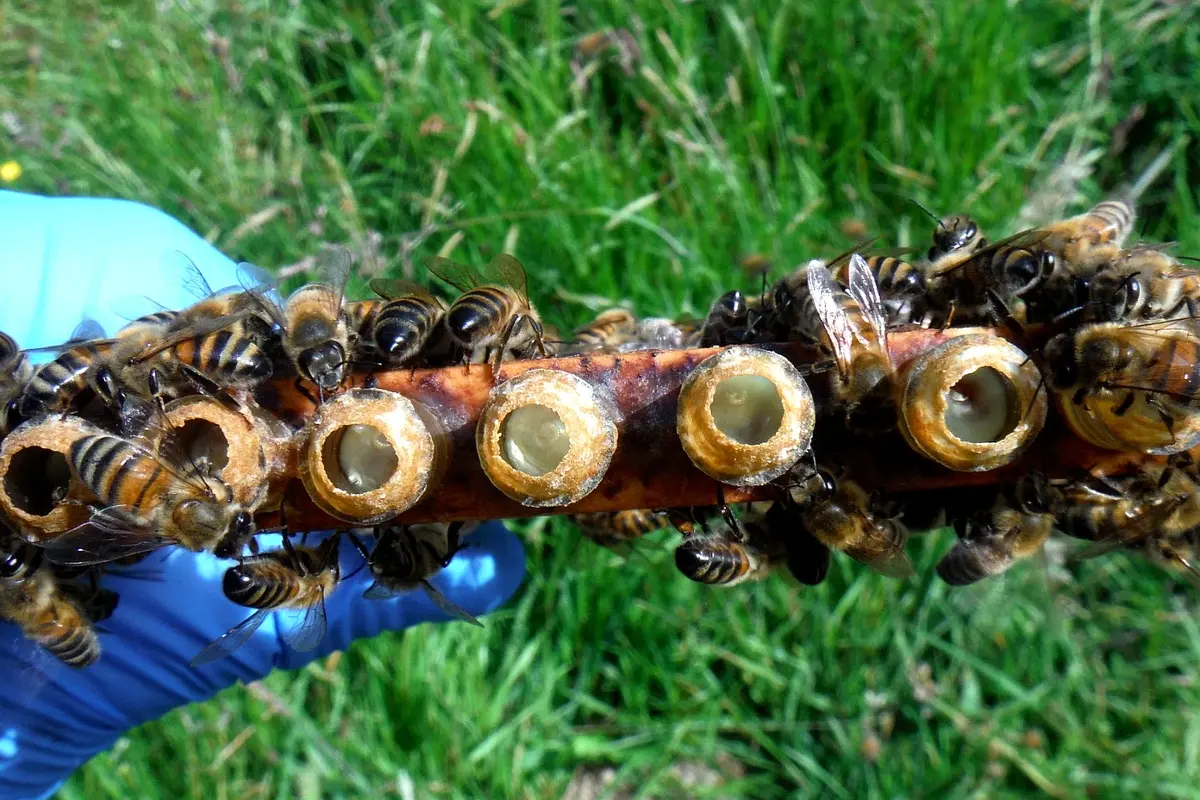
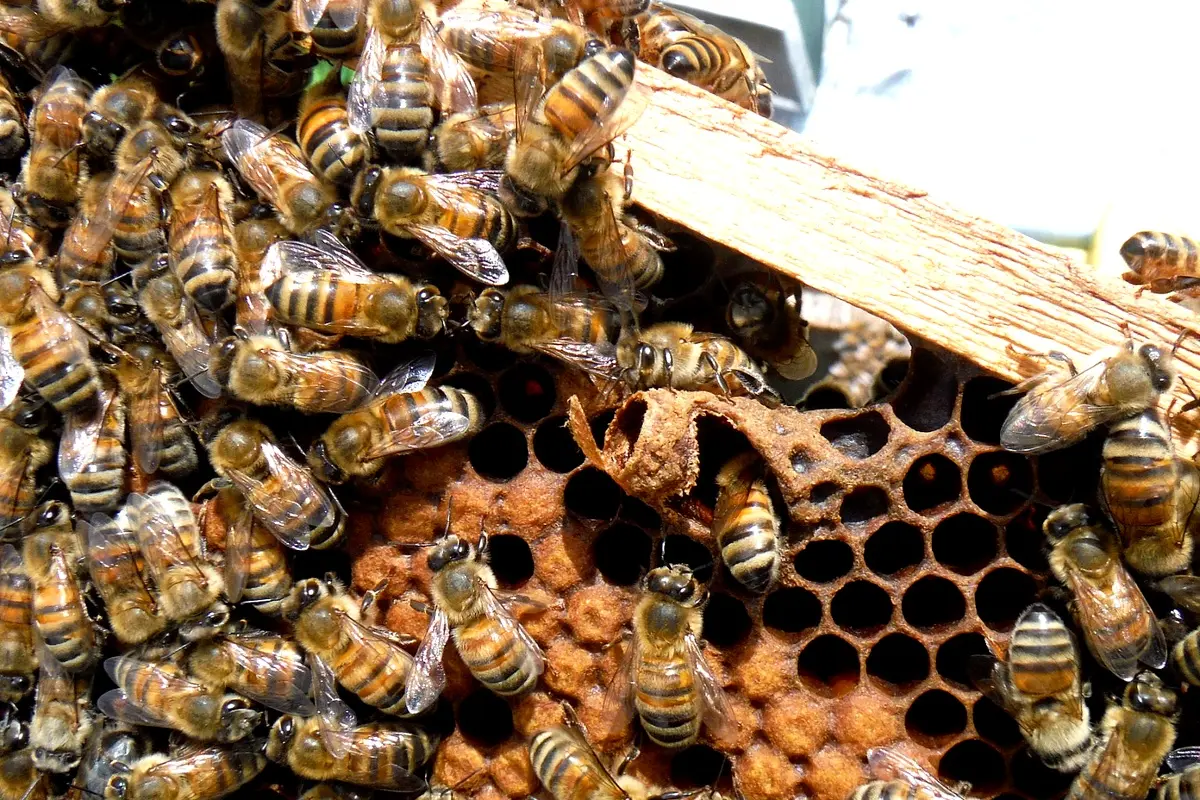
Queen cups are commonly present in colonies and, on their own, are not a reason to intervene. A cup containing an egg or larva deserves closer attention, but it still needs to be read with the rest of the colony. Look at its position, number and development, the amount of brood and stores, available laying space, colony strength and the season. A developing queen cell can occur in more than one context; avoid assuming its purpose from one feature alone.

Once queen cells are sealed, preparation may be well advanced. That is a point to assess carefully and act promptly if the colony and your management aim call for it, not a reliable calendar promise of exactly when a swarm will leave. Weather, forage, colony condition and the colony’s own decisions all affect what happens next.

Space matters, but space is not a cure-all

Giving a colony usable room before it becomes restricted is sound routine management. The colony needs laying space around the brood nest and suitable places to store incoming food. An empty box in the wrong place, or comb the bees are reluctant to use, may not solve the problem. Adding space also does not necessarily reverse a reproductive process that is already established. Check whether the space is appropriate and whether the colony uses it, rather than treating equipment as an automatic answer.

What to look for at an inspection

  • Is the colony expanding, holding steady or becoming compressed?
  • Is there enough usable laying and storage space in the places the bees need it?
  • Are drones and drone brood appearing as part of wider seasonal development?
  • Are there queen cups or cells, and what stage are they at?
  • What has changed since the last inspection, and what would you expect to see next?

Act early, and match the action to the evidence

Early signs give you more options. Depending on the colony, that may mean improving the arrangement of comb and space, making up a split, using a planned swarm-control method, or deciding that the colony’s condition needs further observation before you disturb it. Choose the smallest action that fits the colony and your purpose. Once a colony is well into swarm preparation, late or partial interventions can be less reliable.

Keep a brief note of the signs you found, the stage of any cells, what you did and what you expect at the next visit. That lets you test your reading of the colony rather than relying on a rigid timetable. A swarm-risk assessment is not a prediction of certainty; it is a practical judgement made from a changing natural system.

Honey bee brood on a frame
Assessing Brood, Stores and Space

← Back to Educational Resources

Brood, stores and space are often discussed as if they can be counted into tidy frame totals. In a working colony they are usually mixed together, and the more useful question is not “how many frames?” but “does this arrangement make sense for this colony, in these conditions?” Your assessment should help you understand what is happening and what, if anything, needs to change.

Brood: look for a coherent story

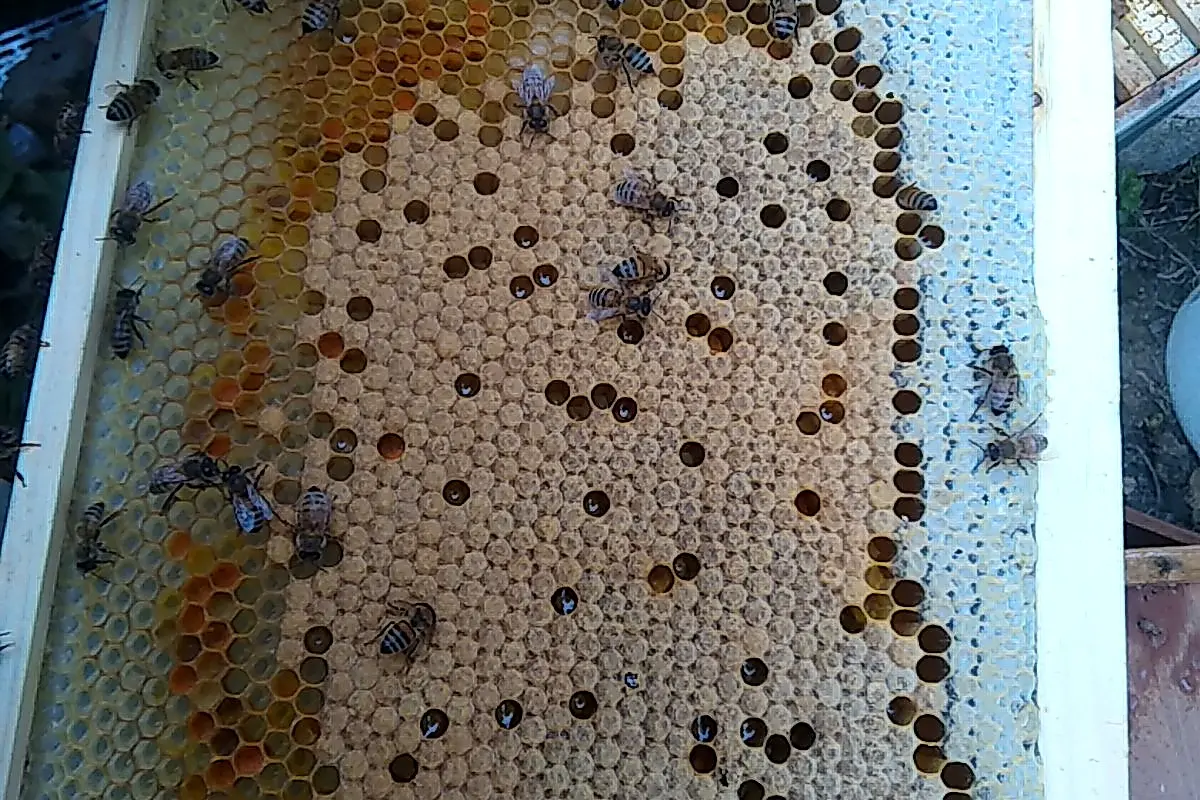
Eggs, open larvae and sealed brood show different points in one continuing process. A colony with a laying queen and a sensible progression of brood stages is often giving a useful picture of continuity. But a good brood pattern is not a perfect solid rectangle. Pollen, nectar and honey can appear among brood cells, and the brood area changes with the season, forage and colony strength.

Rather than scoring a pattern, ask whether it is broadly coherent. Is the colony raising brood at a level that makes sense for its size and the time of year? Does it appear to be expanding, holding steady, reducing or becoming compressed? An uneven area may warrant a closer look or a follow-up; it does not automatically diagnose a queen problem or disease.

Stores: look at where the food is

Beekeeper assessing stores in a honey bee colony
Assess available food alongside brood and the amount of usable space.

When you assess stores, look at where the food is — not just how much honey is somewhere in the hive. Bees need accessible food around the brood nest, particularly when weather prevents foraging or when brood rearing is demanding. Honey above a queen excluder is not automatically available to the colony in the way and at the time it needs it. Some colonies move stores readily; others are reluctant to do so.

Consider the relationship between brood and food, the colony’s current population, the weather, remaining forage and the time until you will next inspect. Pollen is part of the picture too: it is the protein source used to rear brood. A colony can look well supplied in one part of the hive while the area that matters most is becoming short. Equally, not every store outside the brood area is genuinely surplus for the beekeeper to take.

Space: the right comb in the right place

Space does not simply mean an empty box. A colony needs usable comb in the right place for the work it is doing: laying space near the brood nest, room to store incoming food and, when appropriate, space above for the crop. A small colony in a large cold box may not be helped by more volume, while a strong colony can become restricted even when there is apparently empty comb somewhere it is not inclined to use.

Look at how the bees are using the comb, rather than assuming that every empty-looking frame is equally useful. If you add space, make a simple prediction about how it should be used and check that at the next visit. If it remains unused, that is information about the colony’s needs rather than proof that you should add still more equipment.

Avoid false precision

A mixed frame might contain brood, pollen, nectar and stores in different proportions. Recording it as half a frame of one thing and a quarter of another can create numbers that look exact but do not improve your judgement. Short notes about the overall picture are often more useful: “brood nest expanding, accessible stores light, added one frame beside brood” tells you what you saw, what you did and what you should check next.

Use the next inspection to test your reading

The value of an assessment is in what it helps you predict. If you believe the colony is building, what would you expect to see next week? If you moved a frame or added space, has the colony used it? If stores were light, has the weather or forage changed the risk? Records should keep these exceptions, decisions and follow-up points clear. Over time, this helps you recognise normal development and spot a genuine change before it becomes urgent.

Purposeful Hive Inspections

A hive inspection should begin with a reason, not simply because a certain number of days has passed. The purpose might be to check that a new queen has started laying, to judge whether a colony needs more usable space, to follow up something that was unusual last time, or to assess its direction as the season changes. That clear purpose helps you work calmly, disturb the colony less and notice the evidence that matters.

Everything is okay unless the colony shows you otherwise

Most of the time, a healthy colony is simply going about its work. The aim is not to hunt for a fault in every frame; it is to recognise what looks normal for that colony, at that time, and to notice when something does not fit. A quiet entrance, a patch of stores in the brood nest or an uneven-looking frame may all have perfectly ordinary explanations. Put each observation in context before deciding it is a problem.

Read the colony before you open it

Watch the entrance and the weather for a moment. Bees may be foraging, orientating, ventilating or sitting in because conditions are poor. None of those things is enough on its own to diagnose the colony. They are the first clues in a wider picture. Your reason for opening the hive should then guide how far you need to go; you do not need to inspect every frame or find the queen on every visit.

Look for a pattern, not a tally

Beekeepers carrying out a practical hive inspection
A purposeful inspection starts with a question and the evidence in the colony.

When the hive is open, take in its overall condition before becoming absorbed in individual frames. Does the colony’s population, brood, food and use of comb make sense together? Is it expanding, stable, reducing or preparing to reproduce? Frames are often mixed: brood, pollen and stores do not arrange themselves into neat, countable blocks. Trying to convert every mixed frame into a precise total can distract from the more useful question: what is the colony doing, and why might it be doing it?

Brood is evidence, not a verdict. Eggs show that a queen has laid recently; open larvae and sealed brood tell you about a continuing sequence of rearing. Their arrangement should be read alongside colony strength, weather, forage and the season. The same applies to stores and space. Space is not simply an empty box or unused frame: it is the right comb in the right place for the colony to use when it needs it.

Observe, predict and test

One of the most useful habits is to make a simple prediction before you close the hive. If the weather holds and the colony is building steadily, what would you expect to see next time? If you have added space, do you expect it to be used? If a young queen was present but not yet laying, what evidence should have appeared by the next check? The next inspection then tests your reading of the colony. Over time this develops practical confidence far better than following a fixed inspection timetable.

Record what matters

Detailed frame-by-frame inventories are rarely necessary. A competent routine record may be no more than “inspected — all normal”. Record the things that need memory or follow-up: an unexpected observation, a concern, an action taken, what you expect to happen next and when you plan to look again. That keeps records useful without turning the inspection into an exercise in measuring everything.

Separate inspection from manipulation

Inspection is observation and judgement. Manipulation is the change you make because the evidence supports it: adding space, feeding, making a split, uniting colonies or dealing with a queen issue. Do not make a change merely because it is part of a routine. Be clear about why it suits this colony now, and leave it with a sensible next check. The colony usually tells you what you need to know if you take the time to notice it.