
-
Oct, Sun, 2026

Purposeful Hive Inspections
A hive inspection should begin with a reason, not simply because a certain number of days has passed. The purpose might be to check that a new queen has started laying, to judge whether a colony needs more usable space, to follow up something that was unusual last time, or to assess its direction as the season changes. That clear purpose helps you work calmly, disturb the colony less and notice the evidence that matters.
Everything is okay unless the colony shows you otherwise
Most of the time, a healthy colony is simply going about its work. The aim is not to hunt for a fault in every frame; it is to recognise what looks normal for that colony, at that time, and to notice when something does not fit. A quiet entrance, a patch of stores in the brood nest or an uneven-looking frame may all have perfectly ordinary explanations. Put each observation in context before deciding it is a problem.
Read the colony before you open it
Watch the entrance and the weather for a moment. Bees may be foraging, orientating, ventilating or sitting in because conditions are poor. None of those things is enough on its own to diagnose the colony. They are the first clues in a wider picture. Your reason for opening the hive should then guide how far you need to go; you do not need to inspect every frame or find the queen on every visit.
Look for a pattern, not a tally
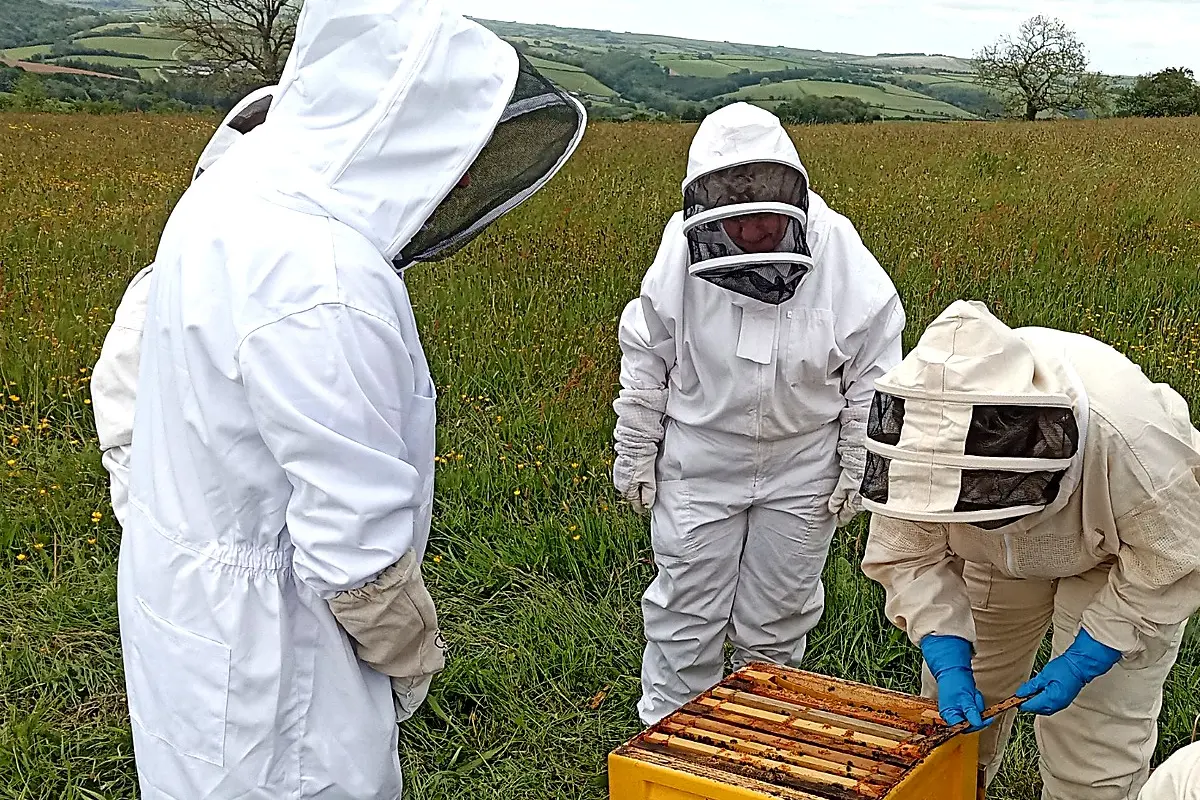
When the hive is open, take in its overall condition before becoming absorbed in individual frames. Does the colony’s population, brood, food and use of comb make sense together? Is it expanding, stable, reducing or preparing to reproduce? Frames are often mixed: brood, pollen and stores do not arrange themselves into neat, countable blocks. Trying to convert every mixed frame into a precise total can distract from the more useful question: what is the colony doing, and why might it be doing it?
Brood is evidence, not a verdict. Eggs show that a queen has laid recently; open larvae and sealed brood tell you about a continuing sequence of rearing. Their arrangement should be read alongside colony strength, weather, forage and the season. The same applies to stores and space. Space is not simply an empty box or unused frame: it is the right comb in the right place for the colony to use when it needs it.
Observe, predict and test
One of the most useful habits is to make a simple prediction before you close the hive. If the weather holds and the colony is building steadily, what would you expect to see next time? If you have added space, do you expect it to be used? If a young queen was present but not yet laying, what evidence should have appeared by the next check? The next inspection then tests your reading of the colony. Over time this develops practical confidence far better than following a fixed inspection timetable.
Record what matters
Detailed frame-by-frame inventories are rarely necessary. A competent routine record may be no more than “inspected — all normal”. Record the things that need memory or follow-up: an unexpected observation, a concern, an action taken, what you expect to happen next and when you plan to look again. That keeps records useful without turning the inspection into an exercise in measuring everything.
Separate inspection from manipulation
Inspection is observation and judgement. Manipulation is the change you make because the evidence supports it: adding space, feeding, making a split, uniting colonies or dealing with a queen issue. Do not make a change merely because it is part of a routine. Be clear about why it suits this colony now, and leave it with a sensible next check. The colony usually tells you what you need to know if you take the time to notice it.