Category Understanding Colonies

First Inspections: What to Look For

A first inspection is not a test that you either pass or fail. Its purpose is to begin learning what a colony looks and feels like when it is going about its normal work, and to notice when something needs closer attention. Keep the first visit calm and purposeful. You do not need to find every answer at once.

Before you open the hive

Watch the entrance for a moment. Are bees flying purposefully, carrying pollen, bringing in nectar or making short orientation flights? A quiet entrance is not automatically a problem, and a busy entrance is not automatically proof that all is well. It is simply your first piece of information. Notice the weather too: a warm, calm day makes inspection easier for both you and the colony.

Look for the colony’s overall condition

Once the hive is open, take a moment before lifting frames. Is the colony covering the frames well for the time of year? Does it seem settled, or unusually defensive, noisy or agitated? Are there signs of damp, mold, pests or robbing? The aim is to build a picture rather than react to one isolated detail.

Brood: the clearest sign of direction
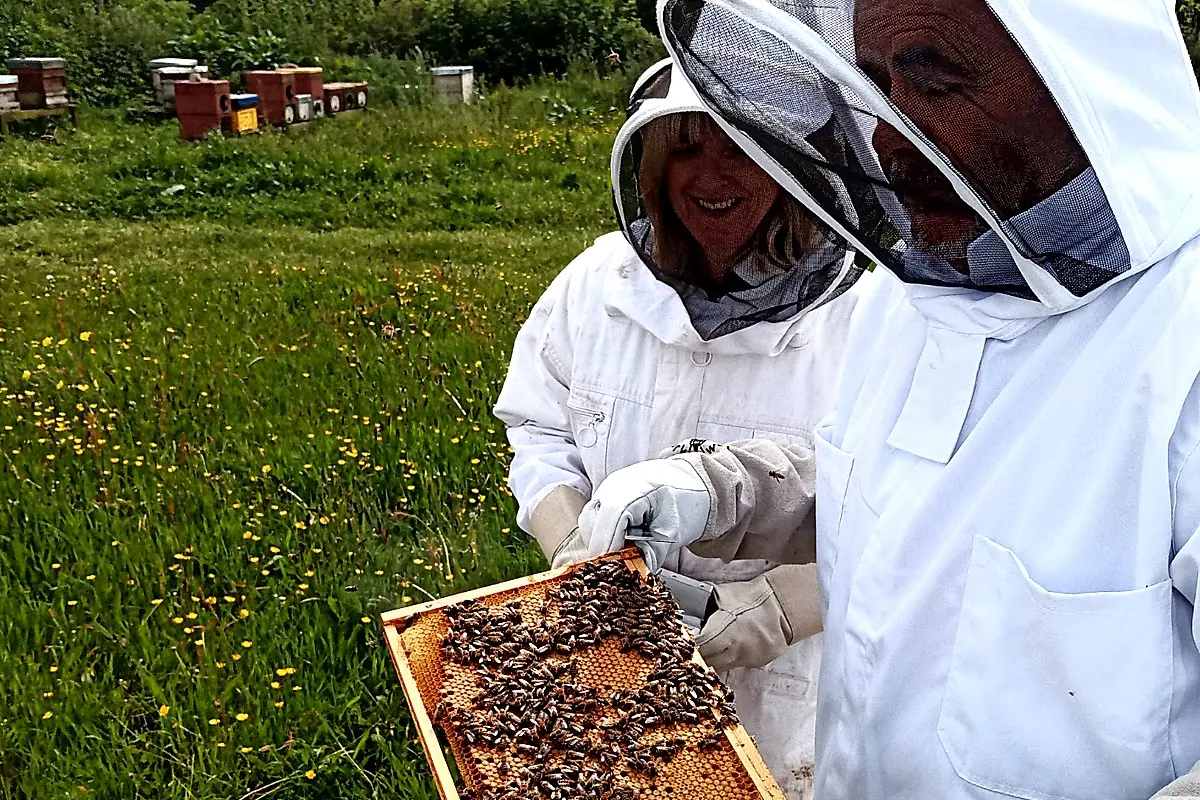
Two beekeepers examining a frame of honey bees in an apiary
A purposeful inspection is guided by the evidence in the colony.

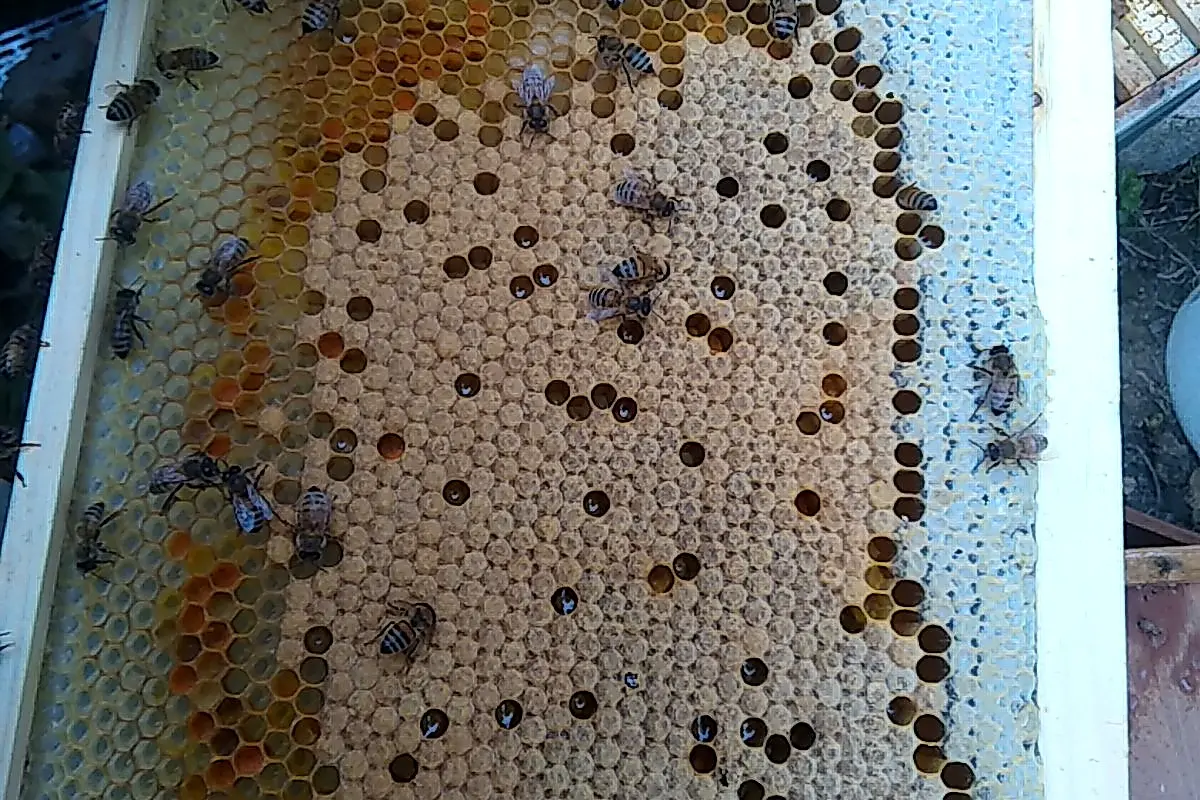
For a new beekeeper, the most useful question is often whether the colony is raising brood in a way that makes sense for its size and the season. Look for eggs, open larvae and capped brood. You do not have to find the queen every time; seeing eggs tells you that a queen has been laying very recently.

A good brood pattern is not necessarily a perfectly solid block. Colonies are living systems, and patches of pollen or stores within the brood area can be normal. What matters is whether the brood looks broadly coherent and whether you can explain what you are seeing. If something appears uneven or unusual, make a note and look again at the next inspection rather than jumping immediately to a conclusion.

Stores, space and comb

Check that the colony has food around it. The amount of honey or syrup stores needed depends on weather, forage and colony size, so there is no single number that suits every hive. Pollen matters too: it is the protein source used to rear brood. Consider whether the bees have enough usable space, rather than simply counting empty frames. A small colony in a large cold box can struggle just as much as a crowded colony can run out of room.

What to record

Keep a short record after each inspection: date, weather, colony temperament, brood stages seen, stores, space, anything unusual and what you decided to do next. A few clear notes are far more useful than trying to remember everything. They let you compare one inspection with another and make decisions from the colony’s own pattern, not just from someone else’s expectation.

Keep the first inspections simple

Try to leave the colony as calmly as you found it. Work steadily, replace frames in the same order and avoid holding the hive open longer than necessary. With experience, you will notice more. At the beginning, the important thing is to become familiar with normal colony activity and to give yourself a reliable basis for asking better questions.

Advice is most useful when it helps you understand the reason behind an action. If someone recommends that you do something, ask what they are seeing in the colony and why that response suits the circumstances. Beekeeping is built on observation and judgment, not on following a fixed script.
Honey Bee Life Cycles: From Egg to Adult Bee

Every honey bee begins as an egg, but the time taken to become an adult and the work it will later do depend on its caste, the conditions in the colony and the season. The figures below are useful working guides, not deadlines. Development temperature in particular can shift the timing, and colonies do not run to a perfectly fixed timetable.

One life cycle, three castes

Queens, workers and drones all pass through the same broad stages: egg, larva, pupa and adult. The difference is in the development programme the colony gives them. A fertilised egg can become a queen or a worker; an unfertilised egg develops into a drone. A young larva selected to become a queen is reared differently from a worker larva, which is why queen development is faster.

Egg

The queen lays a single egg in the base of a clean cell. For the first few days it stands upright, then gradually leans over before hatching. Seeing eggs tells you that a queen has been laying very recently, but it does not by itself tell you everything about the colony’s wider condition.

Larva

After roughly three days, the egg hatches into a larva. Nurse bees feed and care for it in an open cell. At this stage the larva grows rapidly and the amount and type of food it receives matters. A queen larva continues on a queen-rearing diet and develops in a queen cell; worker and drone larvae develop in their own sized cells.

Pupa

When the larva is ready, workers cap the cell. Inside, the larva changes into a pupa and then an adult bee. This is why sealed brood is useful evidence of what was happening in the colony around a week or more earlier; it is not a separate new brood event appearing on the day you inspect.

A practical development guide

Counted from the day the egg is laid, a queen commonly emerges at about day 16, a worker at about day 21 and a drone at about day 24. Those are practical mid-points, not promises. Differences in developmental temperature and colony conditions can bring emergence forward or push it back, so it is sensible to work within a window and to keep checking the colony’s actual progress.

  • Queen: egg for about 3 days; open larva until around day 8; then sealed and developing until emergence at roughly day 16.
  • Worker: egg for about 3 days; open larva until around day 9; then sealed and developing until emergence at roughly day 21.
  • Drone: egg for about 3 days; open larva until around day 10; then sealed and developing until emergence at roughly day 24.

Adult life is not a fixed job timetable

Once emerged, adult workers gradually take on different tasks, but this is flexible rather than a strict age-based rota. Younger workers are often involved with cleaning, brood care and food processing; later they may build comb, guard, ventilate or forage. Colony need can change that progression. Summer workers may live only a few weeks because of the intensity of work, while winter workers can live for several months. Drones mature, fly to drone congregation areas and may mate with virgin queens; their age at maturity and their presence in the colony also vary with conditions.

Using the stages when you inspect

Looking for eggs, larvae and sealed brood gives you a short history of the colony as well as a picture of today. Rather than treating one stage as a pass-or-fail test, ask whether the stages present make sense together for the colony and the season. At the next inspection, compare what you expected to see with what has actually developed. That is how timing becomes a useful guide instead of a rigid rule.

Queens, Workers and Drones: How the Colony Works

A honey bee colony is made up of queens, workers and drones. These are not independent job titles: a colony works through the many interactions between its bees, its brood, its food stores and the conditions around it. Understanding the different roles helps you read a colony, but no single bee—or single sign—explains the whole picture.

The queen: reproduction, not command

Marked queen bee among worker bees on comb
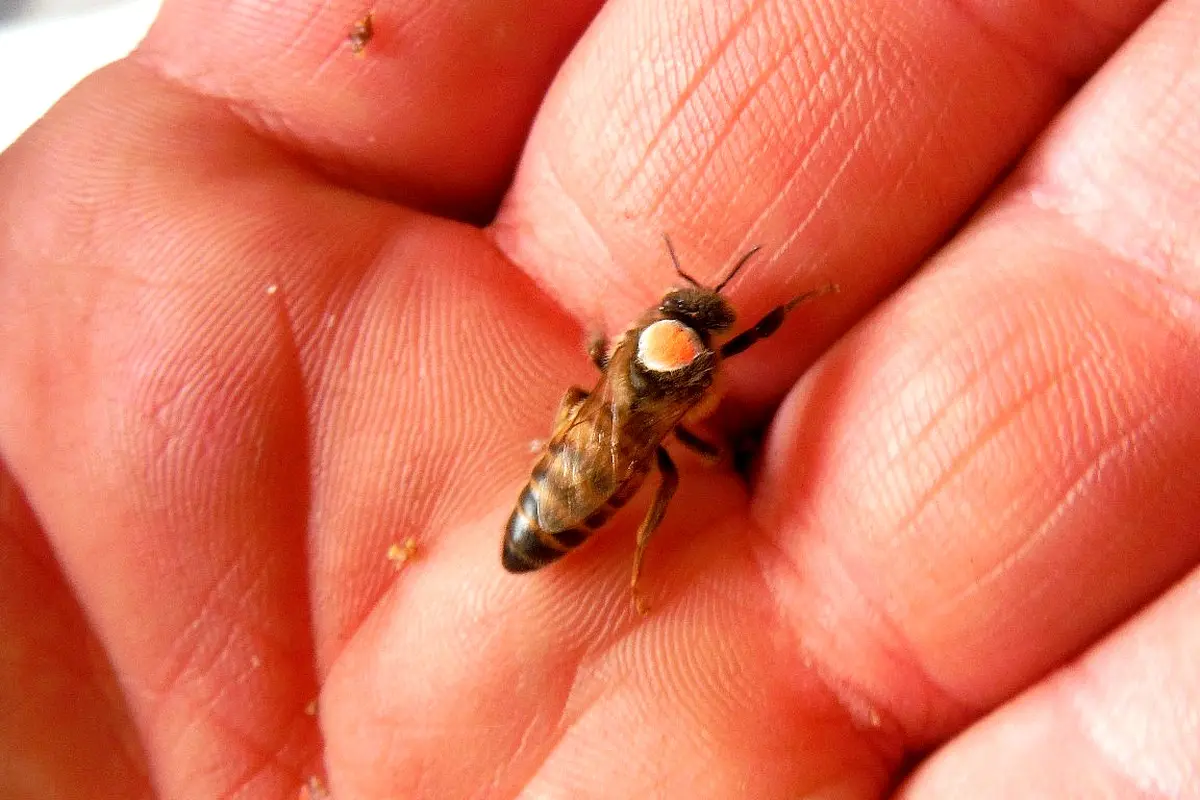
A marked queen is easier to spot among workers during an inspection.

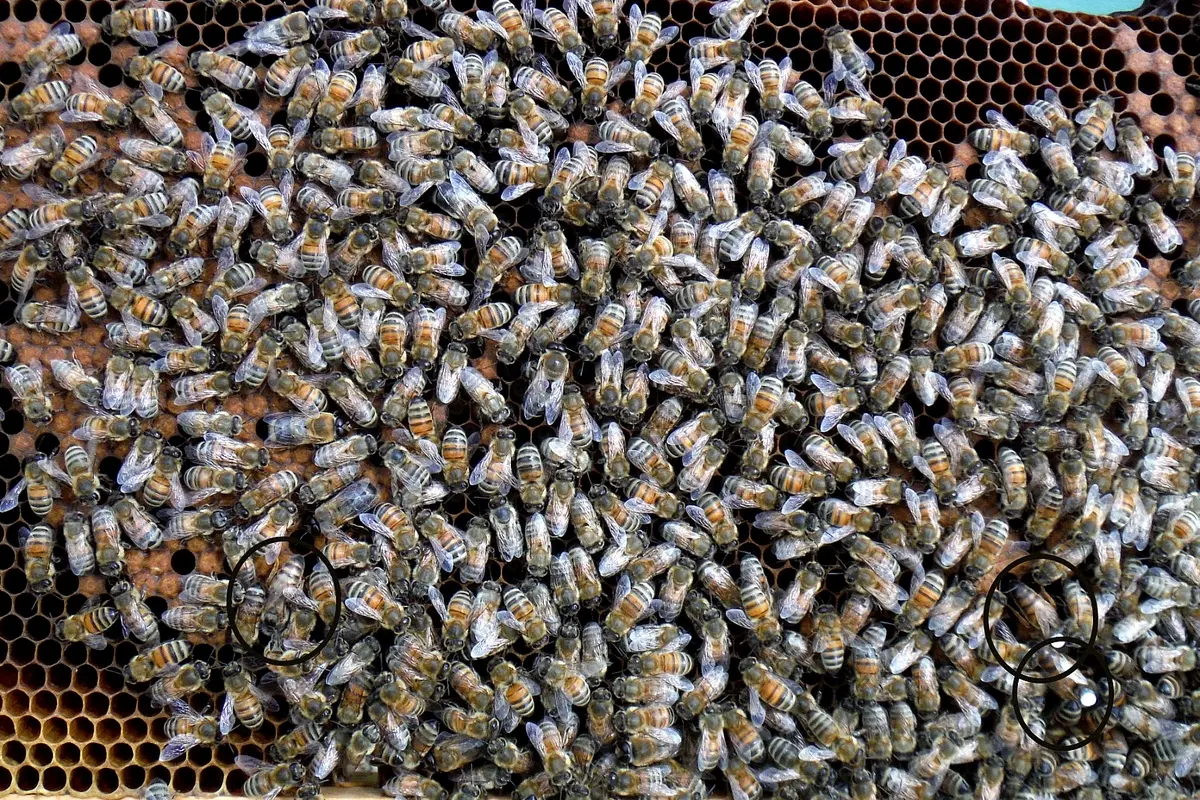
The queen is normally the colony’s main reproductive female. She lays fertilised eggs, which develop into female bees, and unfertilised eggs, which develop into drones. Whether a female larva becomes a worker or a queen depends on how it is reared.

The queen’s pheromones are part of the chemical signalling that helps maintain colony cohesion and reproductive organisation. That does not make her a leader directing individual workers. Colony activity emerges from interactions between bees and from feedback about brood, food, space, weather and other conditions.

Workers: a flexible female workforce

Workers are female bees and carry out the activities that allow the colony to function: cleaning and maintaining the nest, rearing brood, building wax comb, receiving and storing food, ventilating, guarding and foraging.

The type of work a worker is most likely to do often changes with age and physiological state, but it is not a rigid timetable. Workers can respond to what the colony needs. A colony short of foragers, for example, can bring workers into foraging earlier; a colony with a great deal of brood has a different demand on its workers from one preparing to overwinter.

Drones: male bees and mating

Drones are male bees. Their primary biological role is to mate with virgin queens, helping to move genes between colonies. They do not forage for the colony or take part in brood rearing, but they are an important part of the colony’s reproduction and of the wider bee population.

The number of drones and their seasonal presence vary with colony condition, forage and the time of year. Seeing drones is therefore something to place in context, rather than a reason to draw a conclusion on its own.

Roles work together

The queen’s laying establishes the next generation; workers provide the food, warmth, care and nest conditions that allow brood to develop; drones contribute to reproduction beyond the colony. These roles only make sense as parts of a living system. Seeing the queen, seeing drones, or counting a few workers at a task is not, by itself, a verdict on how a colony is doing.

What to look for at an inspection

Rather than trying to count every bee or record every task, ask whether the pattern in front of you makes sense for that colony at that time. Are eggs and brood present where you would expect them? Does the worker population look sufficient for the amount of brood and the season? Are drones present in a way that fits the time of year and the colony’s condition?

Use those observations to predict what you expect to find next time, then test that prediction. A brief note is most useful when something is unexpected, needs action or needs a follow-up—not when a normal colony has simply continued normally.

Next read: Honey Bee Life Cycles: From Egg to Adult Bee

How a Honey Bee Colony Changes Through the Season

A honey bee colony does not follow a fixed calendar. Its population, brood nest, stores and behaviour respond to temperature, weather, forage and the condition of the colony itself. Seasonal patterns are useful context, but the colony in front of you is the evidence that matters.

Winter: survival and conservation

During colder periods, a colony forms a cluster around the brood and stores, using its food reserves to generate heat and survive. Brood rearing may reduce greatly or pause, depending on local conditions. A colony can still be active on mild days, so a quiet entrance is not automatically a problem. The important questions are whether it has accessible stores, is dry and has come through the period in a condition that makes sense for the site and weather.

Spring: growth can outpace appearances

As temperatures and forage improve, queens often increase laying and the brood nest expands. The number of bees does not rise immediately: new workers need time to develop and emerge. This creates a period when a colony may be rearing a large amount of brood while its adult population and stores are under pressure. A promising spring colony still needs observation; cold weather, a break in forage or limited stores can slow or reverse progress.

Early-season pressure and reproduction

As more brood emerges, the adult workforce can grow quickly. Space, stores, weather, queen condition and the colony’s reproductive state all interact. Swarming is the colony’s natural reproductive process, not simply the result of one sign or one date. Queen cells are important evidence, but they are part of a wider picture that includes brood-nest development, open laying space, population and the current conditions.

Summer: gathering, rearing and change

In good forage conditions, colonies may collect nectar and pollen while continuing to rear brood. The balance can change rapidly with a dry spell, heavy rain, a nectar flow ending or a change in available plants. A colony that appeared to have ample stores one week may need a different assessment later. Look at the relationship between the bees, brood, accessible food and available space rather than assuming that summer always means abundance.

Late summer and autumn: preparing for the next season

As conditions change, many colonies reduce brood rearing and begin forming the population that will carry them through winter. Forage may still be available, but it can become more intermittent. This is a useful time to notice whether the colony has a suitable balance of bees, brood and stores, and whether any health or queen issue needs attention before the harder months arrive.

Use patterns, not deadlines

In North Devon and elsewhere in the UK, the timing of these changes can vary greatly between sites and years. Weather, altitude, exposure and local forage all matter. Rather than asking whether a colony is exactly “on schedule”, make a prediction from what you see: what would you expect to change by the next visit? Then test that prediction. Over time, this builds a much stronger understanding of the colonies in your own apiary.

Next read: Queens, Workers and Drones: How the Colony Works

Understanding Brood: Eggs, Larvae and Capped Brood

Brood is the developing generation of bees: eggs, larvae and pupae. Learning to recognise these stages is one of the most useful parts of an inspection, because it shows what the colony has been doing recently and what it is likely to become over the coming weeks.

Read the brood nest as a whole

The brood nest is three-dimensional, rather than a set of neat, separate frames. It is often roughly oval or spheroid in shape, with the developing brood towards the centre, pollen nearby and honey or nectar further around and above it. The exact arrangement changes with the colony, comb, season and available forage. Look for a pattern that makes sense in context, rather than trying to assign exact numbers to each resource.

Eggs

Honey bee brood showing a developing brood pattern on comb
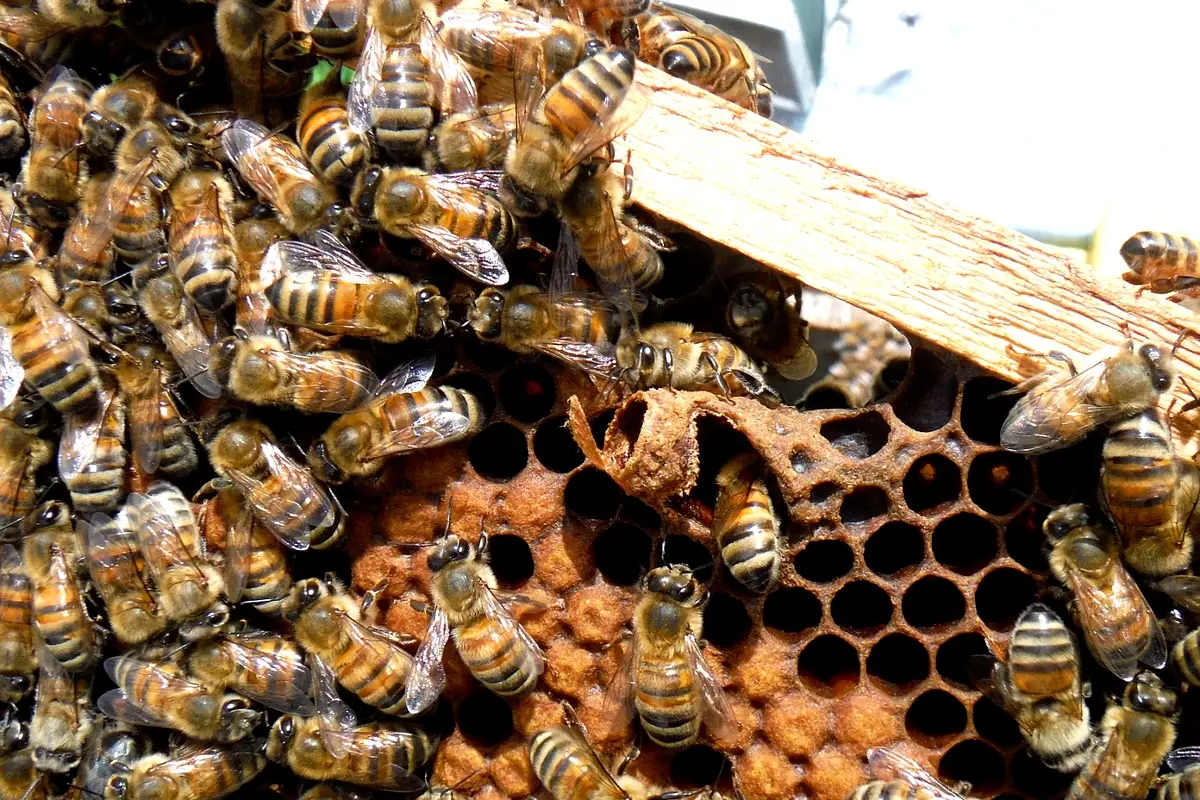
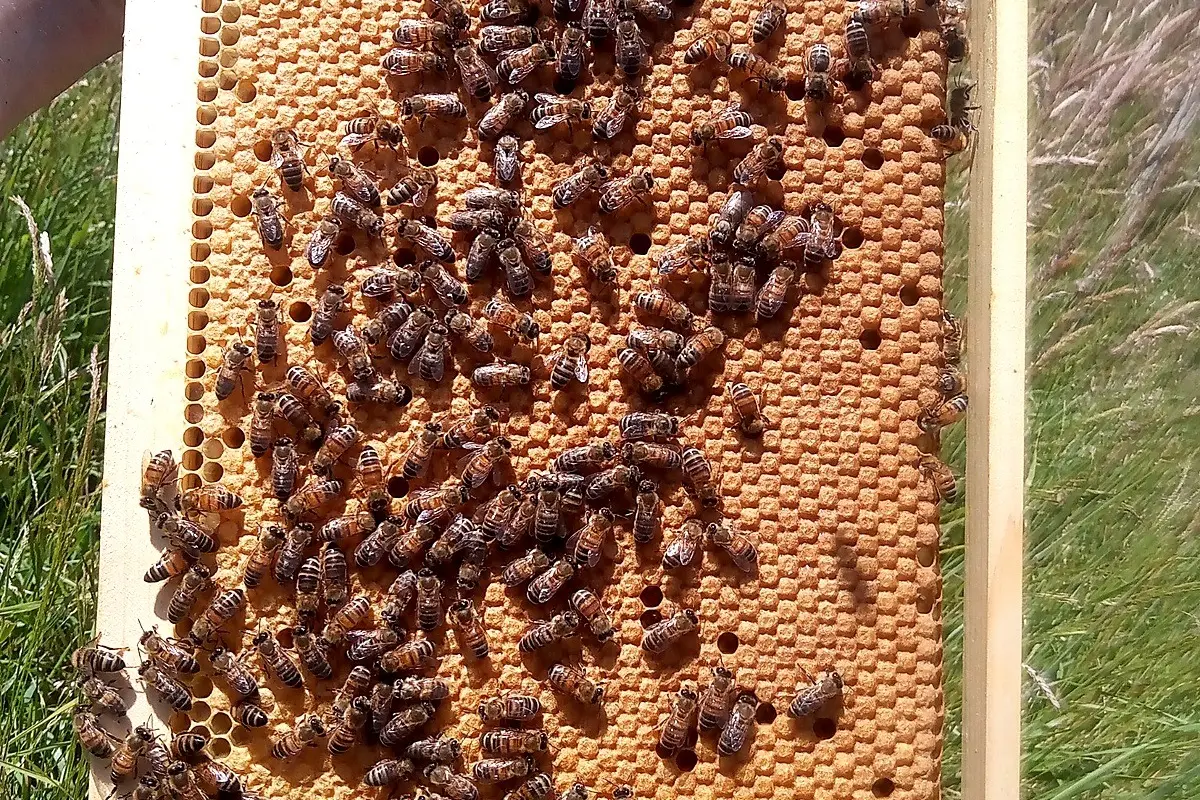
Brood comb varies in appearance, so read it in the context of the whole nest.

Honey bee eggs are small, white and usually laid singly at the base of a cell. Fresh eggs often stand upright, then lean as they develop before hatching. Their position can give a broad indication of age, but it is not a precise clock. Seeing normally laid eggs is good evidence that a queen has been laying recently; it does not, on its own, answer every question about the colony.

Larvae

After hatching, larvae are white, curved and unsealed in their cells. They are fed and tended by workers as they grow. Young larvae can be difficult to see at first, especially in new or dark comb, so good light and a calm, patient look help. Open brood means eggs and larvae; it is a useful sign that the colony has had a continuing laying and brood-rearing process.

Capped brood

When a larva is ready to pupate, workers cap the cell with wax. Beneath the capping, it changes into an adult bee before emerging. Capped worker brood is usually fairly flat; drone brood is larger and more domed. A frame can contain capped brood alongside open brood, pollen, nectar and emerging bees. That mixture is normal and is why whole-pattern observation is more useful than a simple count.

What a brood pattern can—and cannot—tell you

A broadly coherent area containing more than one brood stage usually fits a colony that is raising brood normally. It does not have to be a perfectly solid block. Stores or pollen within the brood area, variation in cell age and emerging bees can all make the pattern less uniform. If the pattern seems unusual, ask what else is present, how the colony is behaving and whether the season explains it. Treat an unexpected pattern as evidence to investigate, not an instant diagnosis.

Development is a guide, not a deadline

Queens, workers and drones all pass through egg, larval and pupal stages, but their development periods differ. Common figures are about 16 days from egg to emerging queen, about 21 days for a worker and about 24 days for a drone. These are practical midpoints, not fixed deadlines: development temperature and other conditions affect the timeline. See Honey Bee Life Cycles: From Egg to Adult Bee for the stages in more detail.

Keep useful notes

After an inspection, record what needs thought, action or follow-up: for example an unexpected brood pattern, limited pollen or uncertainty you want to check again. Routine frame-by-frame inventories rarely improve your understanding. With practice, the aim is to recognise what is ordinary for that colony and notice the exceptions.

Next read: How a Honey Bee Colony Changes Through the Season