
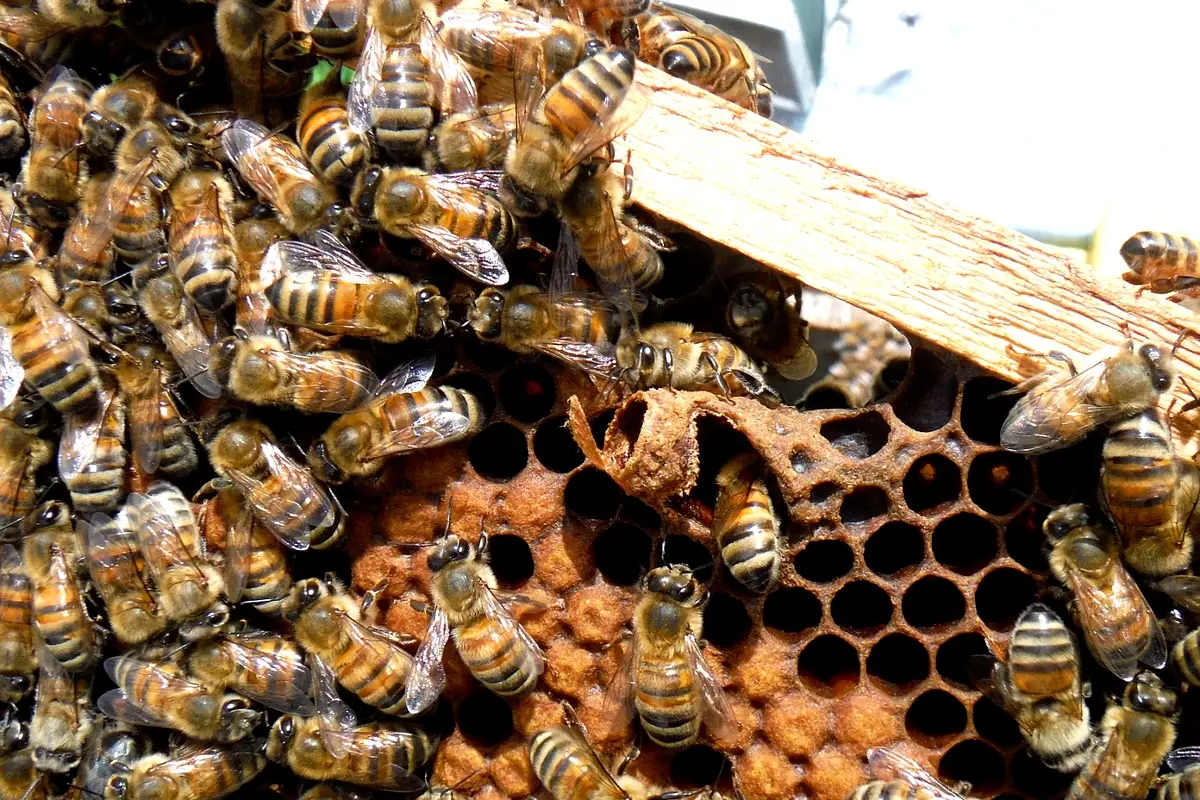
-
Oct, Sun, 2026

Understanding Brood: Eggs, Larvae and Capped Brood
Brood is the developing generation of bees: eggs, larvae and pupae. Learning to recognise these stages is one of the most useful parts of an inspection, because it shows what the colony has been doing recently and what it is likely to become over the coming weeks.
Read the brood nest as a whole
The brood nest is three-dimensional, rather than a set of neat, separate frames. It is often roughly oval or spheroid in shape, with the developing brood towards the centre, pollen nearby and honey or nectar further around and above it. The exact arrangement changes with the colony, comb, season and available forage. Look for a pattern that makes sense in context, rather than trying to assign exact numbers to each resource.
Eggs
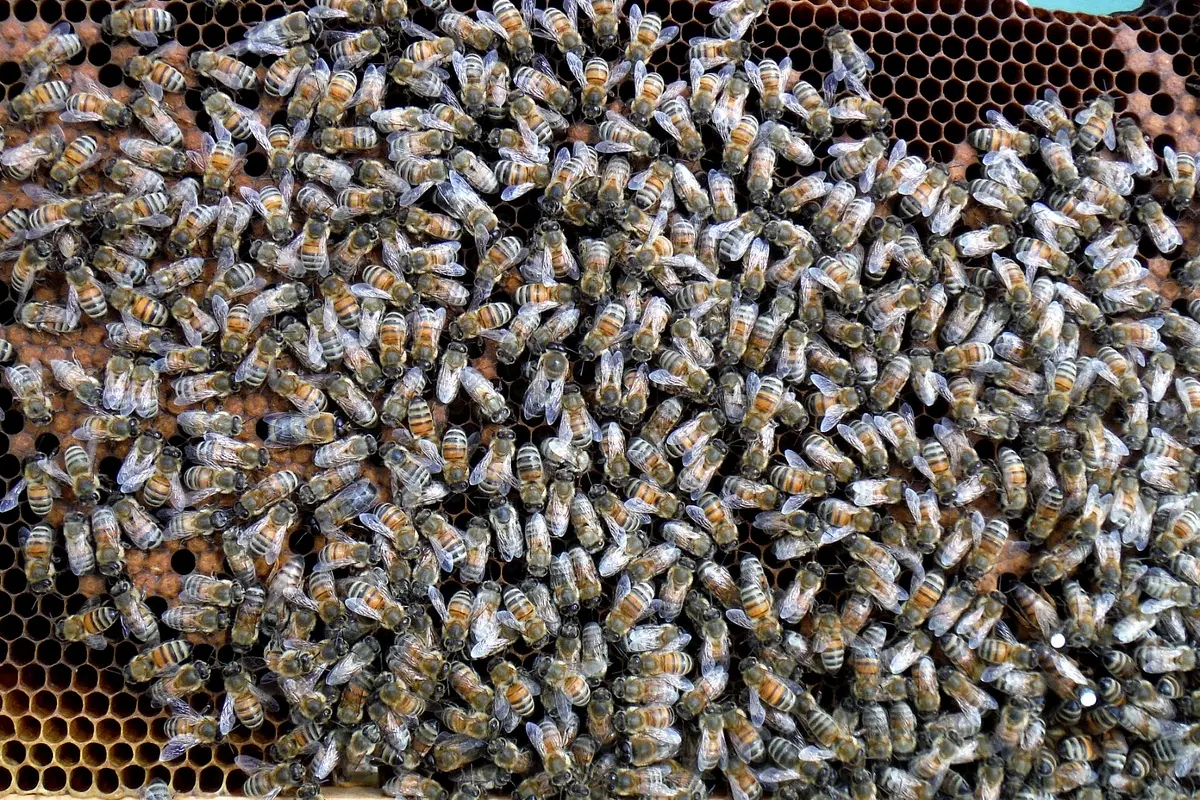
Honey bee eggs are small, white and usually laid singly at the base of a cell. Fresh eggs often stand upright, then lean as they develop before hatching. Their position can give a broad indication of age, but it is not a precise clock. Seeing normally laid eggs is good evidence that a queen has been laying recently; it does not, on its own, answer every question about the colony.
Larvae
After hatching, larvae are white, curved and unsealed in their cells. They are fed and tended by workers as they grow. Young larvae can be difficult to see at first, especially in new or dark comb, so good light and a calm, patient look help. Open brood means eggs and larvae; it is a useful sign that the colony has had a continuing laying and brood-rearing process.
Capped brood
When a larva is ready to pupate, workers cap the cell with wax. Beneath the capping, it changes into an adult bee before emerging. Capped worker brood is usually fairly flat; drone brood is larger and more domed. A frame can contain capped brood alongside open brood, pollen, nectar and emerging bees. That mixture is normal and is why whole-pattern observation is more useful than a simple count.
What a brood pattern can—and cannot—tell you
A broadly coherent area containing more than one brood stage usually fits a colony that is raising brood normally. It does not have to be a perfectly solid block. Stores or pollen within the brood area, variation in cell age and emerging bees can all make the pattern less uniform. If the pattern seems unusual, ask what else is present, how the colony is behaving and whether the season explains it. Treat an unexpected pattern as evidence to investigate, not an instant diagnosis.
Development is a guide, not a deadline
Queens, workers and drones all pass through egg, larval and pupal stages, but their development periods differ. Common figures are about 16 days from egg to emerging queen, about 21 days for a worker and about 24 days for a drone. These are practical midpoints, not fixed deadlines: development temperature and other conditions affect the timeline. See Honey Bee Life Cycles: From Egg to Adult Bee for the stages in more detail.
Keep useful notes
After an inspection, record what needs thought, action or follow-up: for example an unexpected brood pattern, limited pollen or uncertainty you want to check again. Routine frame-by-frame inventories rarely improve your understanding. With practice, the aim is to recognise what is ordinary for that colony and notice the exceptions.
Next read: How a Honey Bee Colony Changes Through the Season