
-
Oct, Sun, 2026

Assessing Brood, Stores and Space
← Back to Educational Resources
Brood, stores and space are often discussed as if they can be counted into tidy frame totals. In a working colony they are usually mixed together, and the more useful question is not “how many frames?” but “does this arrangement make sense for this colony, in these conditions?” Your assessment should help you understand what is happening and what, if anything, needs to change.
Brood: look for a coherent story
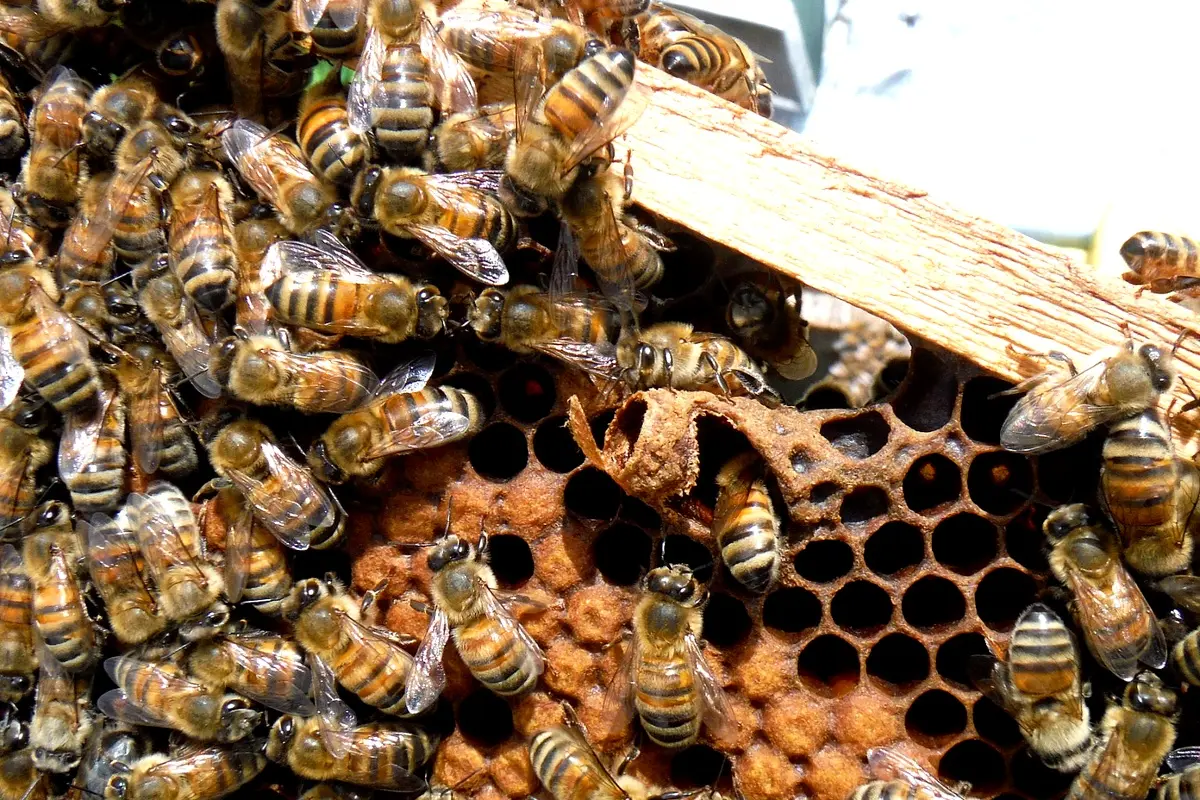
Eggs, open larvae and sealed brood show different points in one continuing process. A colony with a laying queen and a sensible progression of brood stages is often giving a useful picture of continuity. But a good brood pattern is not a perfect solid rectangle. Pollen, nectar and honey can appear among brood cells, and the brood area changes with the season, forage and colony strength.
Rather than scoring a pattern, ask whether it is broadly coherent. Is the colony raising brood at a level that makes sense for its size and the time of year? Does it appear to be expanding, holding steady, reducing or becoming compressed? An uneven area may warrant a closer look or a follow-up; it does not automatically diagnose a queen problem or disease.
Stores: look at where the food is
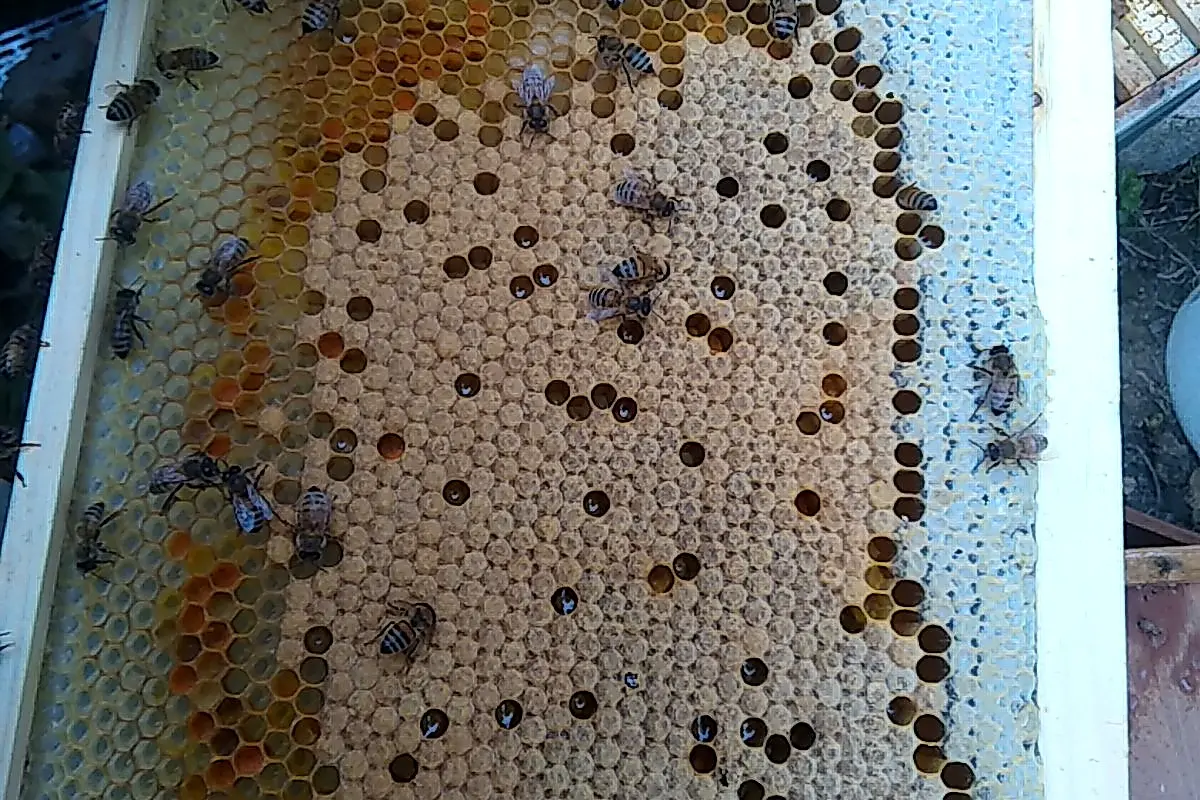
When you assess stores, look at where the food is — not just how much honey is somewhere in the hive. Bees need accessible food around the brood nest, particularly when weather prevents foraging or when brood rearing is demanding. Honey above a queen excluder is not automatically available to the colony in the way and at the time it needs it. Some colonies move stores readily; others are reluctant to do so.
Consider the relationship between brood and food, the colony’s current population, the weather, remaining forage and the time until you will next inspect. Pollen is part of the picture too: it is the protein source used to rear brood. A colony can look well supplied in one part of the hive while the area that matters most is becoming short. Equally, not every store outside the brood area is genuinely surplus for the beekeeper to take.
Space: the right comb in the right place
Space does not simply mean an empty box. A colony needs usable comb in the right place for the work it is doing: laying space near the brood nest, room to store incoming food and, when appropriate, space above for the crop. A small colony in a large cold box may not be helped by more volume, while a strong colony can become restricted even when there is apparently empty comb somewhere it is not inclined to use.
Look at how the bees are using the comb, rather than assuming that every empty-looking frame is equally useful. If you add space, make a simple prediction about how it should be used and check that at the next visit. If it remains unused, that is information about the colony’s needs rather than proof that you should add still more equipment.
Avoid false precision
A mixed frame might contain brood, pollen, nectar and stores in different proportions. Recording it as half a frame of one thing and a quarter of another can create numbers that look exact but do not improve your judgement. Short notes about the overall picture are often more useful: “brood nest expanding, accessible stores light, added one frame beside brood” tells you what you saw, what you did and what you should check next.
Use the next inspection to test your reading
The value of an assessment is in what it helps you predict. If you believe the colony is building, what would you expect to see next week? If you moved a frame or added space, has the colony used it? If stores were light, has the weather or forage changed the risk? Records should keep these exceptions, decisions and follow-up points clear. Over time, this helps you recognise normal development and spot a genuine change before it becomes urgent.