
-
Oct, Sun, 2026

Swarm Awareness: Recognising the Signs
← Back to Educational Resources
Swarming is how a honey bee colony reproduces. It is not simply a mistake or a single sign that has appeared in the hive. For the beekeeper, the useful question is: is this colony beginning to organise itself for reproduction, and how far along is that process?
Read the direction of the colony
A colony preparing to swarm is usually changing in several ways at once. It may be building rapidly, bringing in food, raising large amounts of brood and producing drones. The brood nest can become crowded or compressed as nectar and pollen occupy comb that might otherwise be available for laying. There may also be a growing population of young bees. None of these observations alone proves that a swarm is imminent. Together, and compared with what the colony looked like at the previous inspection, they help to show the colony’s direction.
Queen cups and queen cells
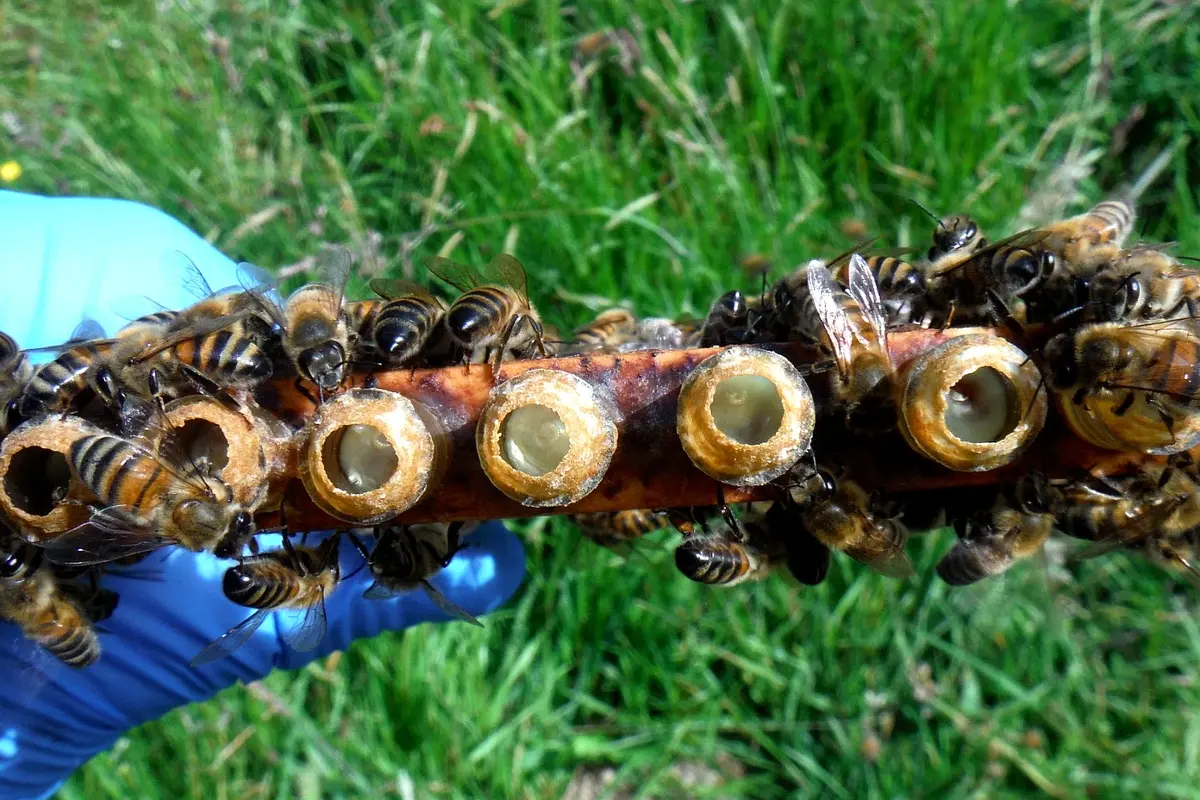
Queen cups are commonly present in colonies and, on their own, are not a reason to intervene. A cup containing an egg or larva deserves closer attention, but it still needs to be read with the rest of the colony. Look at its position, number and development, the amount of brood and stores, available laying space, colony strength and the season. A developing queen cell can occur in more than one context; avoid assuming its purpose from one feature alone.
Once queen cells are sealed, preparation may be well advanced. That is a point to assess carefully and act promptly if the colony and your management aim call for it, not a reliable calendar promise of exactly when a swarm will leave. Weather, forage, colony condition and the colony’s own decisions all affect what happens next.
Space matters, but space is not a cure-all
Giving a colony usable room before it becomes restricted is sound routine management. The colony needs laying space around the brood nest and suitable places to store incoming food. An empty box in the wrong place, or comb the bees are reluctant to use, may not solve the problem. Adding space also does not necessarily reverse a reproductive process that is already established. Check whether the space is appropriate and whether the colony uses it, rather than treating equipment as an automatic answer.
What to look for at an inspection
- Is the colony expanding, holding steady or becoming compressed?
- Is there enough usable laying and storage space in the places the bees need it?
- Are drones and drone brood appearing as part of wider seasonal development?
- Are there queen cups or cells, and what stage are they at?
- What has changed since the last inspection, and what would you expect to see next?
Act early, and match the action to the evidence
Early signs give you more options. Depending on the colony, that may mean improving the arrangement of comb and space, making up a split, using a planned swarm-control method, or deciding that the colony’s condition needs further observation before you disturb it. Choose the smallest action that fits the colony and your purpose. Once a colony is well into swarm preparation, late or partial interventions can be less reliable.
Keep a brief note of the signs you found, the stage of any cells, what you did and what you expect at the next visit. That lets you test your reading of the colony rather than relying on a rigid timetable. A swarm-risk assessment is not a prediction of certainty; it is a practical judgement made from a changing natural system.