
-
Oct, Sun, 2026

Instrumental Insemination Equipment and Setup – An Overview
← Back to Educational Resources
Instrumental insemination needs a purpose-built setup, but it is better understood as a working system than as a list of things to buy. Each part needs to support careful handling, clean technique and the welfare of the queens and drones involved. The right setup is one that is stable, practical to clean and suited to the breeder’s intended work.
The microscope
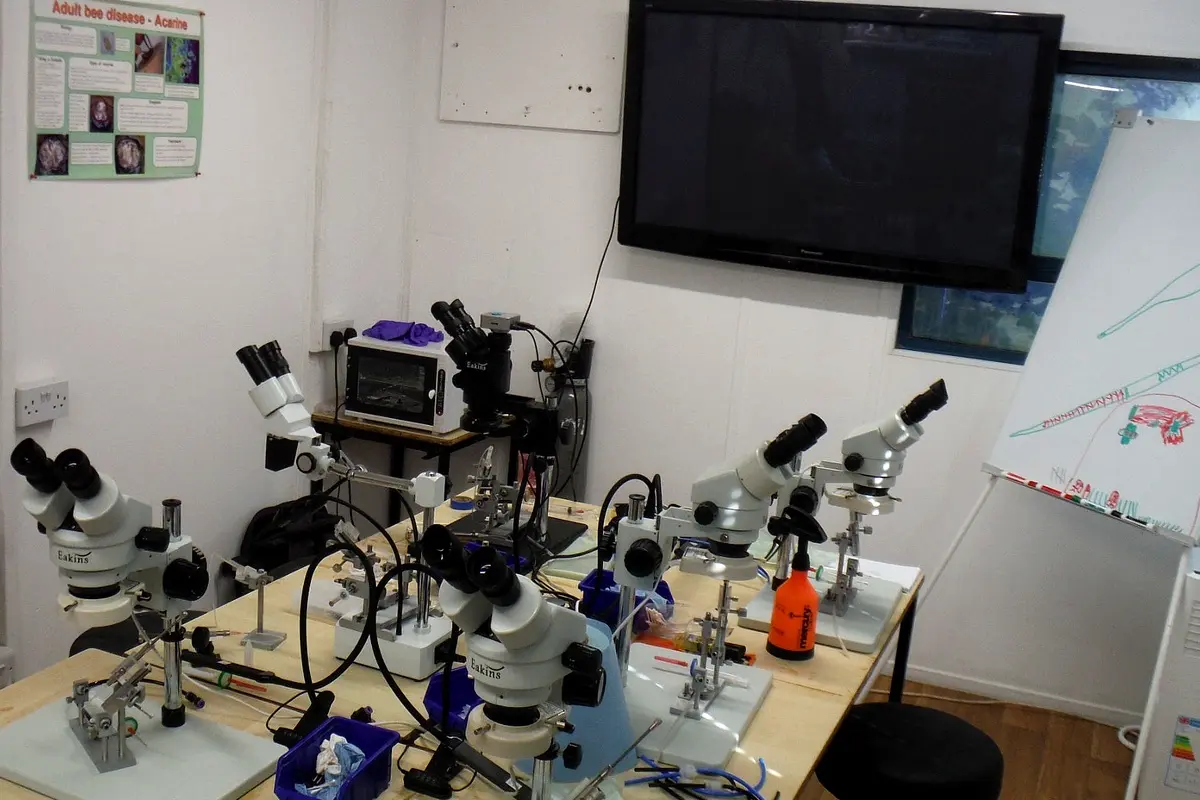
A binocular stereo microscope gives the depth perception needed to work accurately at close range. A generous working distance is important, so that there is room to position the queen and the insemination unit beneath the optics. Variable magnification is useful because it allows the view to be adapted to the stage of the procedure.
A camera or screen can be valuable for teaching and demonstration, but it is not a replacement for the depth perception of a suitable binocular microscope when carrying out the work itself.
The insemination unit
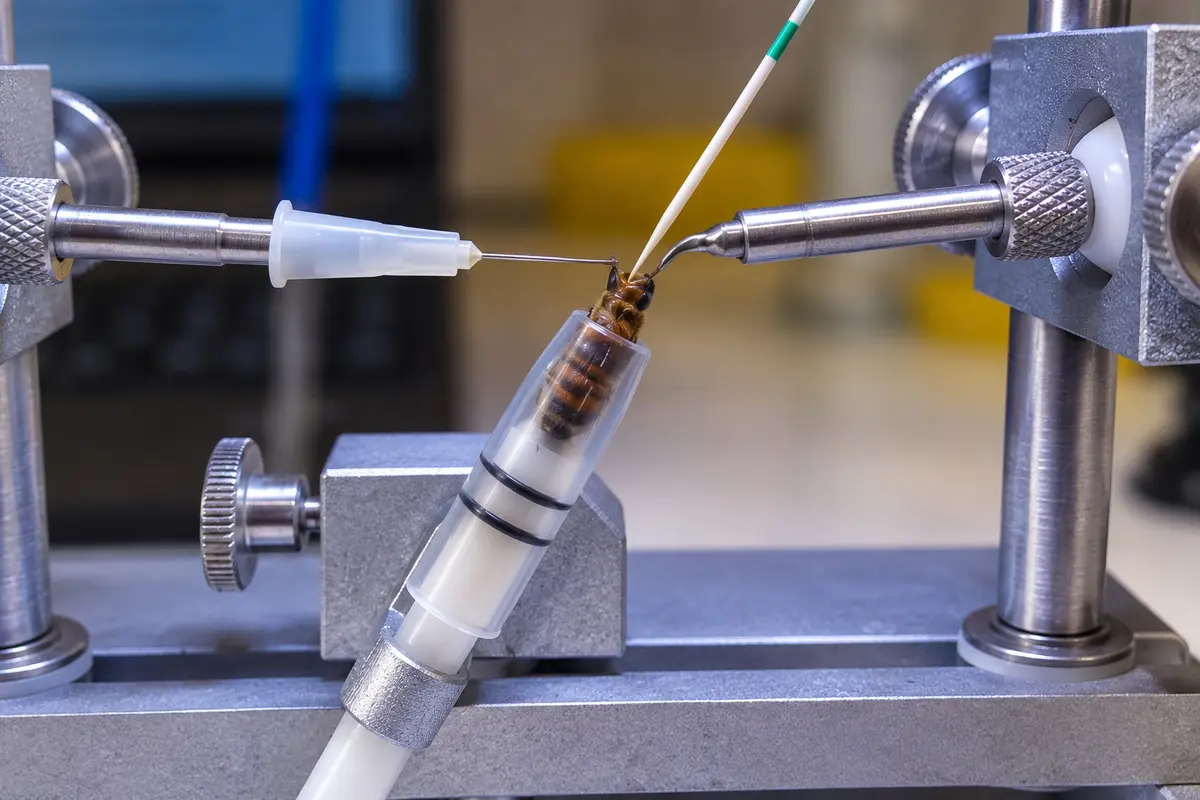
The insemination unit holds and positions the queen and the instruments used to collect and deliver semen. There are several designs and configurations. When choosing one, practical considerations matter more than novelty: it should be stable, straightforward to clean, and use parts and consumables that can be replaced or standardised.
A unit that can be maintained properly and understood by the person using it is more useful than a complicated setup with features that do not support the breeding aim.
Gas control and handling equipment
A controlled carbon-dioxide system forms part of a normal instrumental insemination setup. It needs to be capable of gentle, controlled delivery and used as part of a properly learned procedure. Queen cages, drone cages and other handling equipment are equally important because much of the work is in preparing, holding and caring for the bees before and after the time at the microscope.
Consumables and cleanliness
Routine consumables include insemination tips, syringes, syringe fittings, saline, cotton buds and suitable cleaning materials. These are not minor details. Equipment must be cleaned before and after use so that debris does not build up and so that cleaning leaves no harmful residue on the parts that will contact bees or semen.
Keeping the workspace orderly and the equipment clean makes the procedure more repeatable and makes it easier to identify what needs attention when something does not go as expected.
Supporting the whole system
Depending on the scale and timing of the work, the wider setup may include a drone collection station, queen-holding cages, an incubator and larger cages for temporary care. These items are not automatically necessary for every breeder, but they can make it easier to plan queens, drones and aftercare as a coherent system.
Choose equipment to support competence
Buying specialist equipment is not the same as being ready to use it. Instrumental insemination depends on good bee handling, careful preparation and repeated practical experience. Start with a clear objective, a sound understanding of the process and a setup that can be kept clean and consistent. Add equipment when it solves a genuine practical need.
For most people, hands-on training is the best way to understand how the parts work together before investing in a complete setup. Learn about Bishops Bees’ Instrumental Insemination Course.
Next read: Instrumental Insemination resources