
-
Oct, Sun, 2026

How a Queen Bee Develops: From Egg to Emergence
A queen does not develop simply because a larva is put into a queen cell. She develops because the colony gives a very young female larva the cell, food, care and conditions needed for queen development. The broad timetable is useful for planning, but it is a working window—not a promise of exactly what will happen on a particular day.
From egg to queen larva
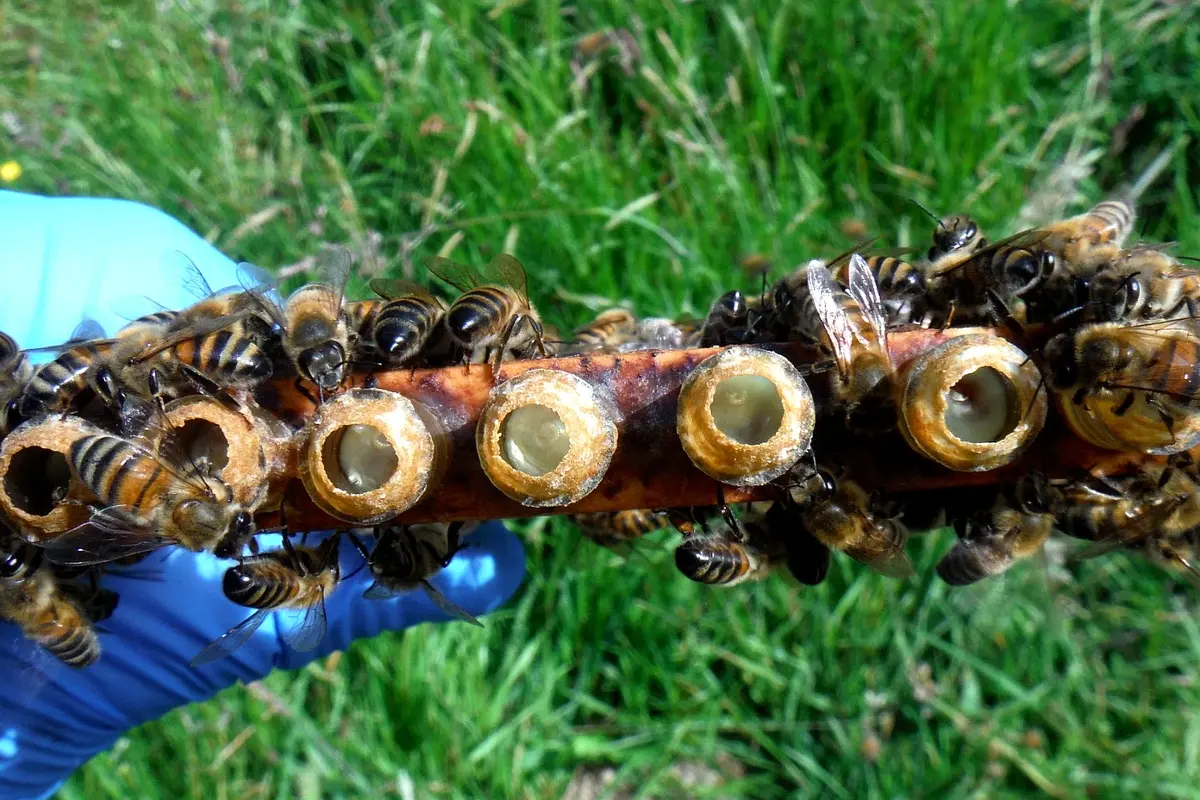
Like a worker, a queen begins as a fertilised egg. It remains an egg for about three days before hatching. The difference between worker and queen development is established through the way the larva is reared: the queen cell, larval feeding and the care provided by the worker bees all matter.
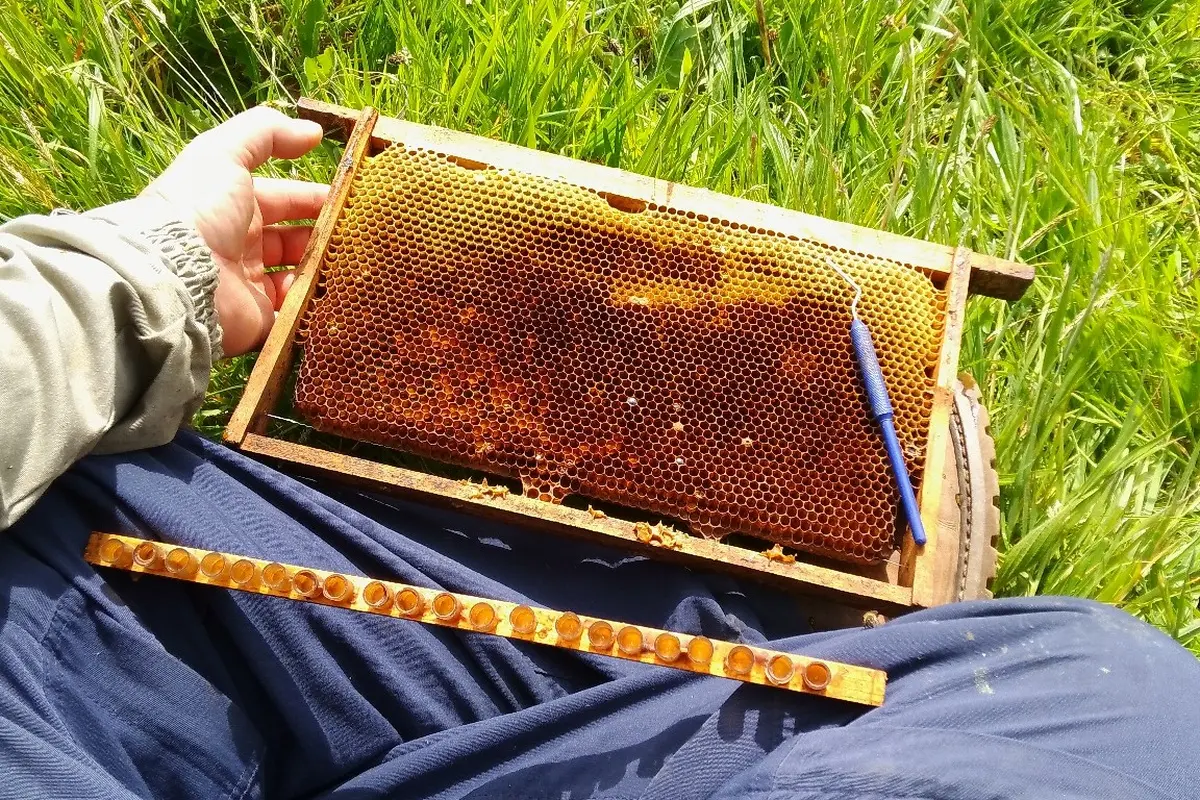
When grafting, the age of the larva matters. Use very young larvae so the colony can continue queen development from an early stage. A larva that is already too old will not give the colony the same opportunity to raise a well-developed queen.
A practical development window
| Stage | Useful planning guide |
|---|---|
| Egg laid to hatching | About three days. |
| Grafting | Use a very young larva, commonly around the point at which it has only recently hatched. |
| Graft to cell sealing | Allow roughly five days as a guide. |
| Sealed cell to emergence | Allow roughly a week, while treating emergence as a window rather than one fixed date. |
| Egg to emergence | Usually planned around sixteen days, with a margin either side. |
These figures are planning aids. Development temperature can shift the timetable: incubator work has shown that changes in temperature alter the emergence window. The genetic background of the queen and the quality of care from the colony also matter. When several cells are due, allow for queens to emerge over roughly a day rather than assuming they will all emerge at one exact time.
Emergence is not the end of development
An emerged virgin queen is not immediately ready to mate. She needs time to mature, orientate and, if conditions allow, take mating flights. A useful practical guide is that sexual maturity may be reached after several days, but the point at which she mates and begins laying depends on weather, drone availability, genetics and the way she is cared for.
In good conditions a queen may be mated and laying within a relatively short period after emergence. Prolonged poor weather can delay the process considerably. Plan checks as ranges: look for evidence of laying around two weeks after emergence, and assess what you find in the context of the weather and whether you can see the queen.
Use the timetable to ask better questions
The purpose of a queen-development timetable is not to force colonies into a calendar. It helps you decide when a cell should be handled carefully, when an emergence is plausible, and when a virgin queen or mating nucleus needs attention. Record the stage, anything unexpected and what you expect to see next; then let the colony and the conditions tell you whether that expectation was sound.
Next read: Queen Rearing & Breeding resources