
-
Oct, Sun, 2026

Choosing Source Colonies for Queen Rearing
← Back to Educational Resources
Choosing a colony to raise queen cells from is a breeding decision, not simply a question of which hive looks strongest today. The source colony contributes the maternal side of the next generation, so it should be chosen for the direction you want the breeding programme to take.
Start with the breeding objective
Decide what you are trying to maintain or improve. This may include survival, colony health, brood quality, temperament, sensible use of stores and space, or other traits that matter in the colonies and conditions you work with. A source colony should make sense against that objective over time, rather than being selected because of one good inspection or one exceptional honey flow.
Assess a colony as a colony
The performance you see in a hive is not produced by the queen alone. It reflects the interaction of the queen, her workers, the drones that mated with her and the environment in which the colony is being kept. Read the whole colony: its development, brood, behaviour, health and response to local conditions.
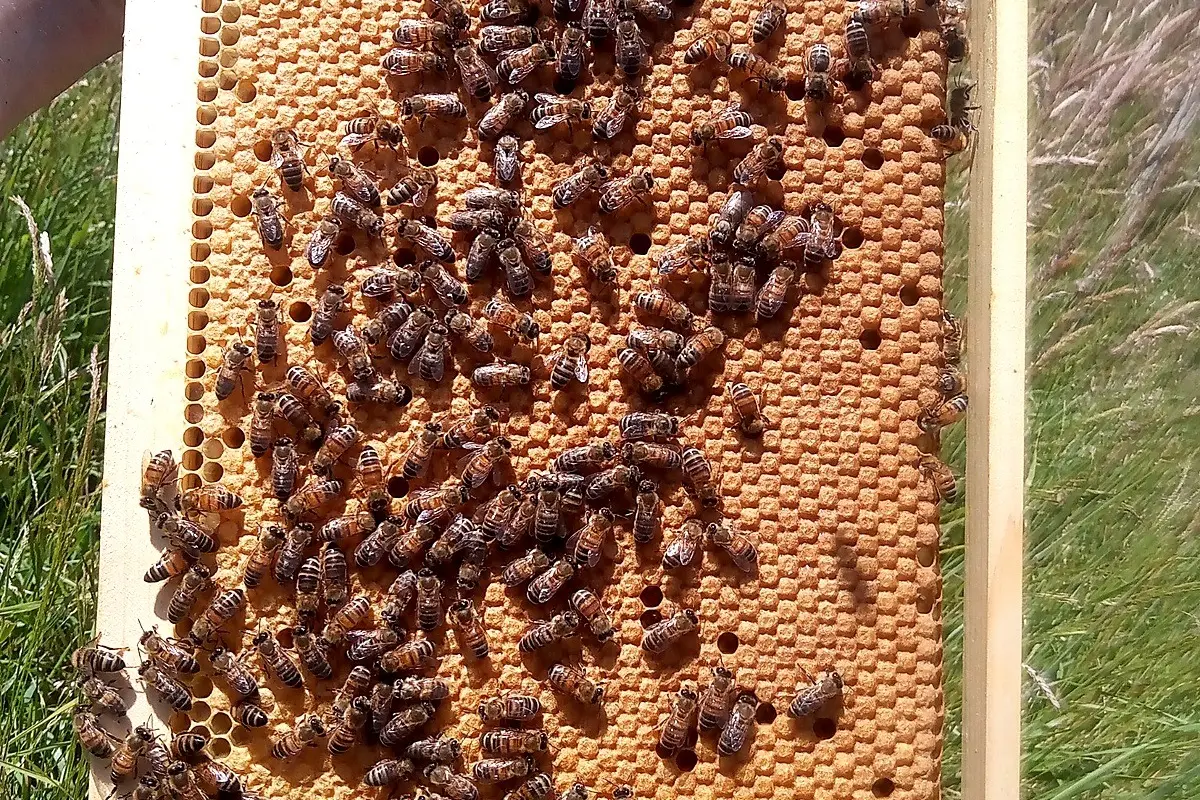
A good brood pattern is useful evidence, but it is not a complete verdict. Likewise, a calm inspection, a good crop or rapid spring growth may be valuable observations without proving that the colony is the best breeder. Look for consistency and for a pattern that fits your selection aim.
Keep source and rearing roles separate
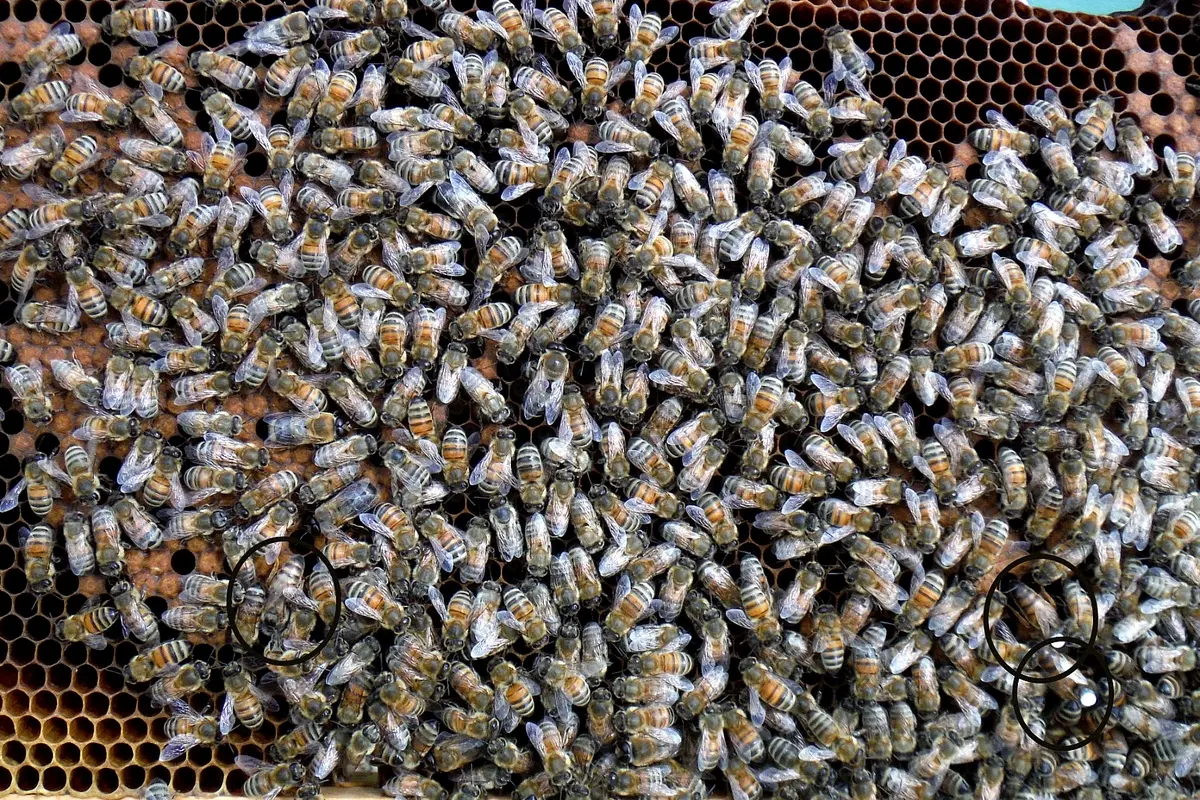
The best colony to provide larvae is not necessarily the best colony to start or finish queen cells. Cell starters and finishers are chosen for their nurse-bee population, resources and ability to care for developing larvae. Breeding source colonies are chosen for the qualities you want to pass on. Keeping those decisions separate helps avoid selecting genetics simply because a colony is convenient for rearing.
Look for concerns as well as strengths
Selection is as much about recognising what should not be carried forward as it is about choosing attractive traits. Investigate persistent health problems, poor brood viability, difficult behaviour, weak recovery or other performance concerns. One unusual observation is a reason to look again; repeated evidence across time is more meaningful.
Remember the paternal side
With open mating, the drone contribution is not fully known. This does not make open-mated daughters useless, but it limits how confidently a breeder can attribute a result to a particular planned pairing. Drone selection and controlled mating can provide more influence or control where that is needed, but neither removes the need to assess the colonies that result.
Use daughters to test the decision
The most useful test of a source colony is what its daughters do. Keep clear, proportionate notes on the source, the mating context and the performance of daughters. Then use those observations to refine the breeding direction. Good selection is an ongoing process of testing, learning and choosing again—not a one-time label placed on a colony.
Next read: Queen Rearing & Breeding resources