-
Oct, Sun, 2026

Choosing Your First Beehive
There is no single “best” hive for every beekeeper. A useful first choice is one that is compatible with the colony you are buying, practical for you to handle and easy to keep standardised as you add equipment.
Choose a system, then standardise
Start by checking the frame type and dimensions of the nucleus colony you plan to buy. Your hive needs to take those frames properly. Once you have chosen a system, keep boxes, frames, floors, roofs and spare parts compatible. That makes inspections, moving frames, adding space and keeping spares much simpler.
National and Langstroth
The British National is common in the UK, with parts available from several suppliers. Langstroth hives are also widely used and can be a good option, particularly when the colony you are buying is already on Langstroth frames. Other systems can work well too. The important point is not to force a colony from one frame format into another simply because a different hive looks preferable.
Think about practical handling
- How much a full box and its frames will weigh for you.
- The height of the hive and the room you have to work around it.
- Where you will keep spare boxes, frames and floors.
- Whether compatible equipment and nucleus colonies are readily available locally.
- Whether the equipment is sound, weatherproof and easy for you to maintain.
Wood or polystyrene
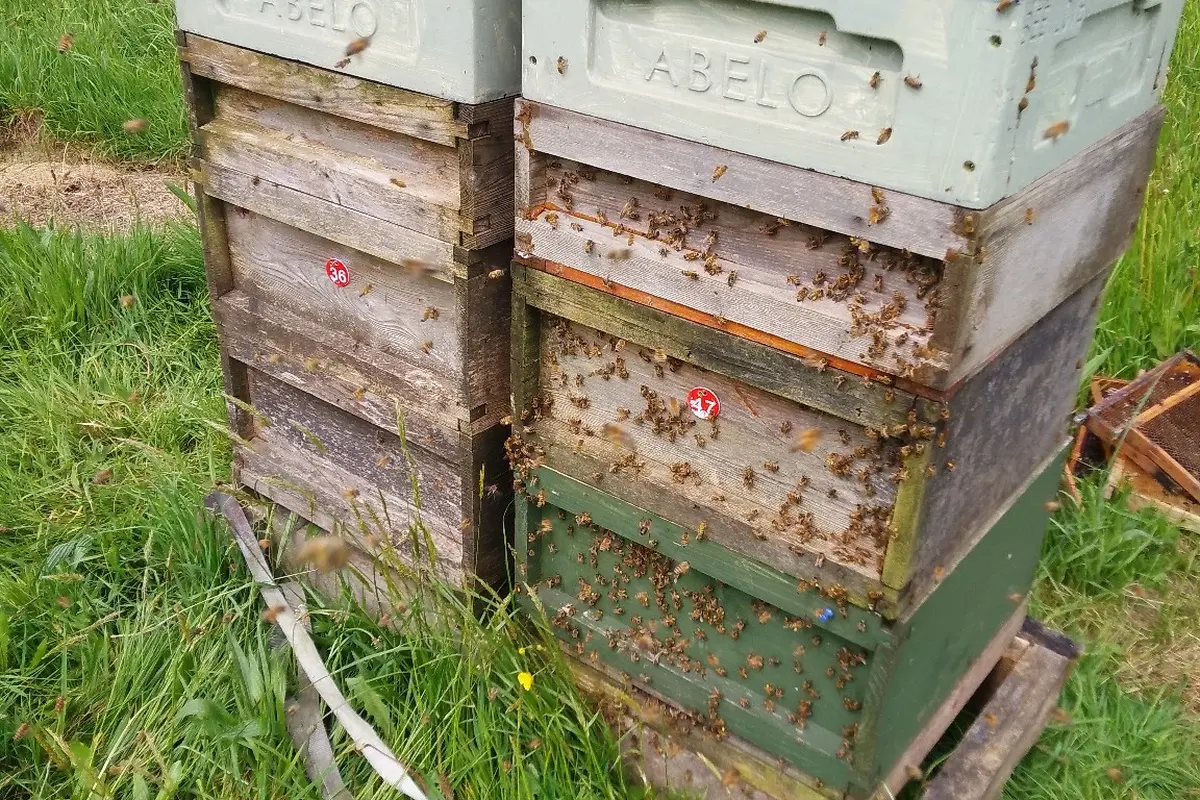
Both wooden and polystyrene hives can be used successfully. Sound, weatherproof equipment matters more than material alone. Check that parts are intended to work together: dimensions can vary slightly between makes, particularly with polystyrene components.
Avoid false economy
Second-hand equipment can be useful, but inspect its condition and compatibility carefully. Make sure it can be cleaned and maintained. A small set of sound, matching equipment is usually more useful than a collection of inexpensive parts that do not fit together.
Start simply
A basic hive that matches your nuc, suitable protective clothing and a few essential tools are enough to begin. Add sensible spares as budget allows. You do not need specialist equipment at the outset; the hive should support good observation and management rather than create unnecessary complications.
Next read: Essential Tools & Clothing