
-
Oct, Sun, 2026

Starting and Finishing Queen Cells: What the Colony Needs
Queen rearing is not only about grafting larvae into cups. The colony must first accept those larvae as queen cells and then continue feeding and caring for them until the cells are mature. A starter and a finisher describe those two jobs. They may be separate colonies or two stages in one carefully managed system.
What a starter does
A starter gives the grafted larvae their first strong response. In the period immediately after grafting, young larvae need abundant attention from nurse bees. A successful starter is prepared so that the bees have a reason and the ability to begin queen cells: it needs a strong population of suitable bees, accessible food and a calm, workable arrangement around the graft frame.
Acceptance is useful information, but it is not the whole result. A high number of cells started does not by itself prove that the colony will finish them well or that every resulting queen will be of the same quality.
What a finisher does
Once cells are established, they still need a colony capable of maintaining the right feeding, temperature and care through the rest of larval development and pupation. A finisher provides this continuity. It needs enough nurse bees and adequate pollen and food stores, and it must remain in a condition where it can support the cells without becoming stressed or disrupted.
A queenright finisher can work well when the cells are kept inaccessible to the resident queen. A queenless system can also be used. The useful choice is the one that gives the developing cells stable, well-supported conditions and that the beekeeper can manage reliably.
Resources matter more than a recipe
There is no single number of frames, bees or grafts that guarantees good queen cells. The important relationship is between the number and age of larvae being asked for, the nurse-bee population, the amount of brood already demanding care, and the available pollen and food. A colony can look very strong and still be the wrong choice if its resources are already stretched.
The conditions experienced by queen larvae matter. Queen cells should therefore be treated as developing animals that need good care from the colony, not as units being processed through a timetable.
Reading the cells and the colony
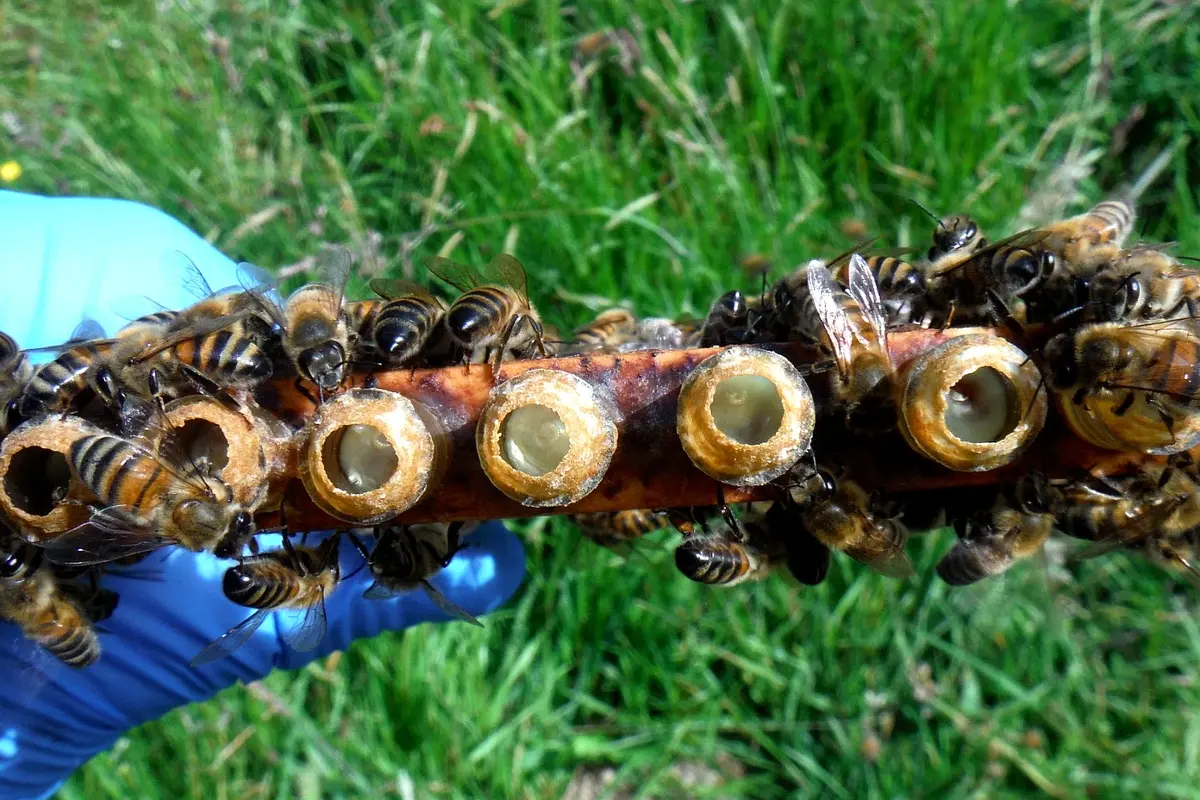
Look at both the cells and the colony supporting them. Are the cells being drawn and maintained? Is there plenty of young-worker activity around the frame? Does the colony still have accessible pollen and food, and is it behaving as you would expect? If acceptance or cell development is disappointing, use that as a prompt to review colony condition, larval age, grafting technique and the surrounding forage—not as a reason to blame one factor automatically.
A practical approach
Prepare the cell-building colony before grafting, make one clear plan for what it is expected to do, and check that expectation at the next stage. Record exceptions, actions and anything that needs a follow-up. Over time, this will teach you which colonies and arrangements consistently give your larvae the conditions needed to become queens worth keeping.
Next read: Queen Rearing & Breeding resources