-
Oct, Sun, 2026

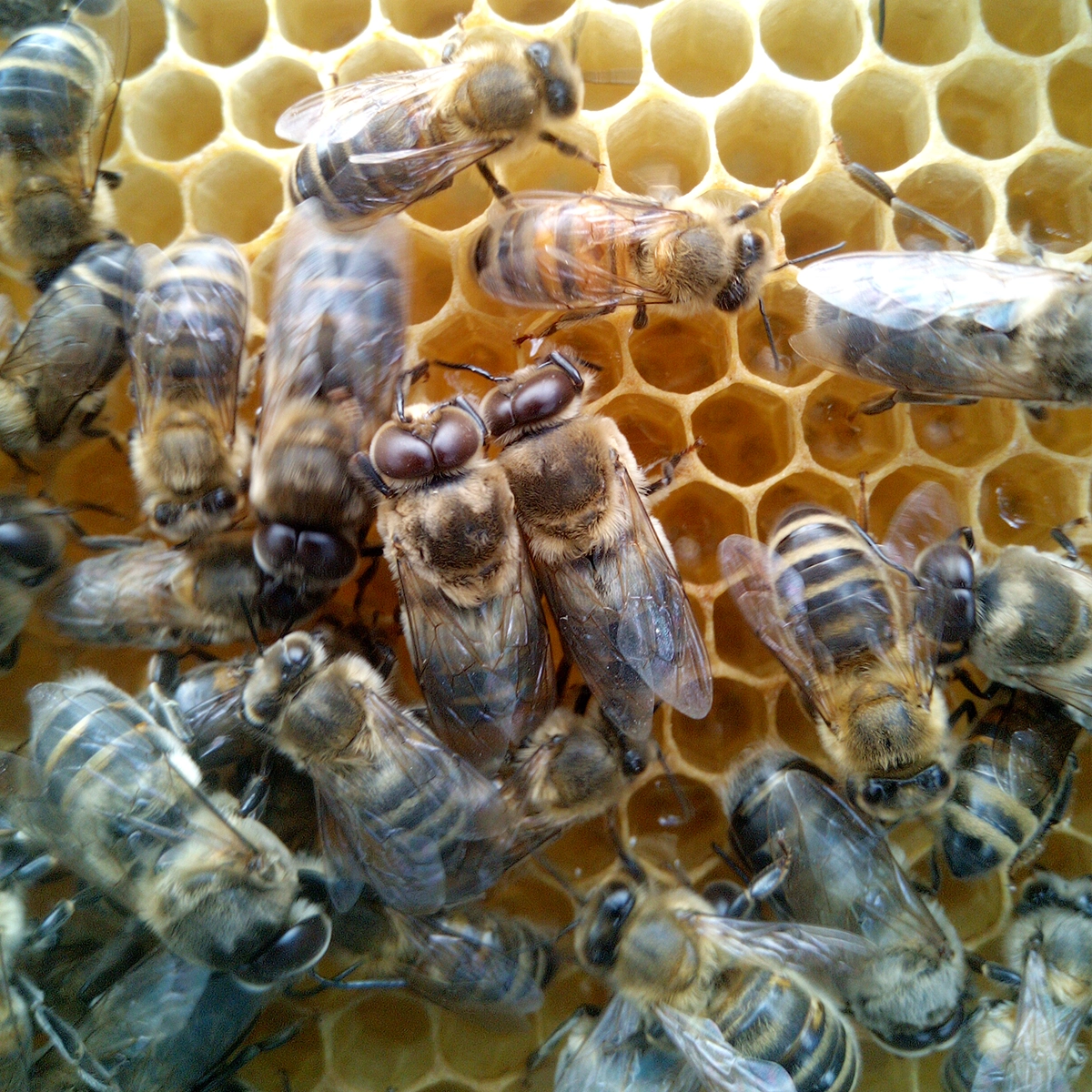
The Drone Side of Queen Breeding
← Back to Educational Resources
Queen breeding is often discussed through the choice of a queen mother, but every daughter colony also has a paternal contribution. The drones that mate with a queen influence the genetics of the workers she produces. If the aim is to understand or direct a breeding programme, the drone side needs as much thought as the maternal side.
Drones are part of the breeding decision
A selected queen can only pass on part of the genetics in her daughters. The rest comes through the drones she mates with. For that reason, a good queen mother does not automatically produce a predictable result if the drone population is unknown or unsuitable for the direction of breeding.
Choose drone-source colonies using the same care applied to maternal sources: look for healthy, workable colonies that perform consistently in the traits that matter. A colony that simply produces a large number of drones is not automatically the right genetic source.
Control and influence are not the same
With open mating, a beekeeper can influence the local drone population by raising drones from selected colonies. This can be useful, particularly where selected colonies are well represented nearby. It is not full control: a virgin queen may still mate with drones from a wider area.
Instrumental insemination offers a different level of control because the drone source can be chosen directly. Both approaches have a place. The useful choice depends on how much certainty the breeding question needs and what is practical in the apiary.
Plan drone production early
Drones need time to develop and then mature before they can contribute to mating. A practical planning point is around forty days from egg laying to a point when there should be a useful number of mature drones. This is a mid-point for planning, not a fixed biological deadline. Development temperature, drone genetics, colony conditions and the way the drones are managed can all move the actual window earlier or later.
Work backwards from the period when virgin queens are likely to be ready, and then look at the colony rather than relying only on the calendar. Are drones present, well cared for and in a condition that makes sense for the season and the colony?
Give drone colonies the conditions to succeed
Drone rearing places a demand on a colony. It needs enough food, a suitable worker population and good overall condition. Drones intended for breeding should not be treated as an afterthought. The quality of the colony’s care, the timing of their development and their opportunity to mature all affect whether a planned drone source is useful in practice.
Keep the record connected to the result
Record which colonies supplied the drones, when they were raised and what mating method was used. Then connect that information to the performance of the queens and daughters that result. This makes it possible to learn from a planned pairing and to distinguish a repeated pattern from a one-off outcome.
Next read: Queen Rearing & Breeding resources