
-
Oct, Sun, 2026

What Is a Nucleus Colony?
A nucleus colony — usually shortened to a nuc — is a small, functioning honey bee colony supplied on its own frames. It is often the most practical way for a new beekeeper to start, because it contains the beginnings of a working colony rather than a loose collection of bees.
What a well-established nuc contains
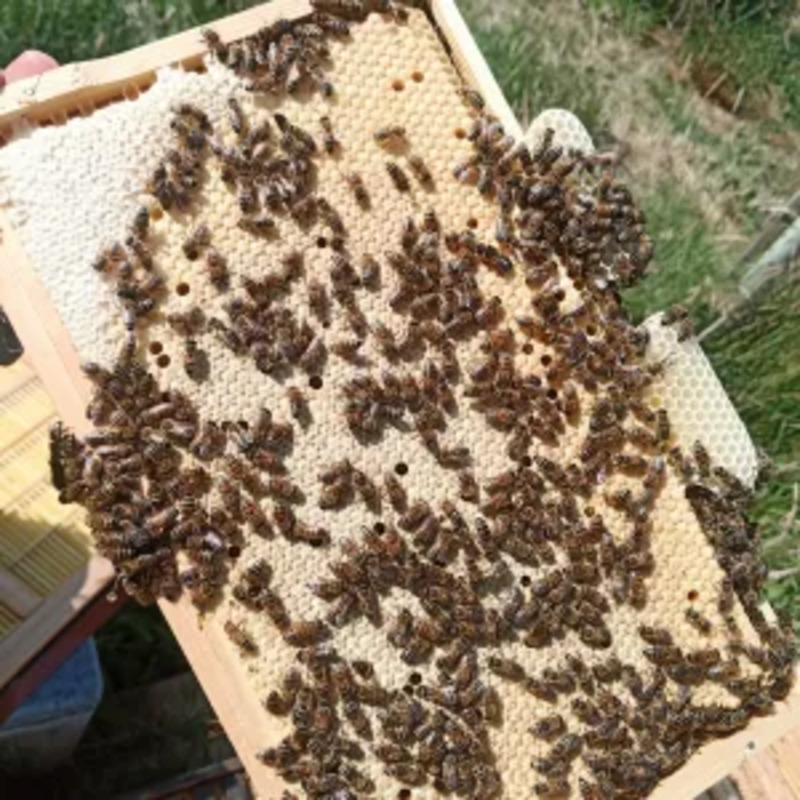
A nuc is normally made up of five or six frames, depending on the system being used. It should have a laying queen, workers, brood in different stages, and appropriate pollen and food stores. The exact balance varies with the season and the colony’s size, but the important point is that the bees, brood and queen form a coherent colony that is already developing.
In an established nuc, most of the workers will be the progeny of its queen. That matters because it shows that the queen has been laying and the colony is functioning around her. It is more informative than simply knowing that a queen has been placed into a box of bees.
A nuc is not just another name for a split
New colonies are often made by splitting bees and comb from an existing colony. This is a normal and useful beekeeping method, and a split can develop into a good nuc. However, a recently made split with a newly introduced queen is at an earlier stage of development than a colony that has had time to establish around her.
That does not make one automatically better than the other. It explains why it is sensible to ask clear questions about what you are buying: when was the colony made, when did the queen begin laying, and how long has the colony been developing as a unit?
Overwintered and spring nucs
An overwintered nuc has come through winter with its queen, so the bees present are normally her progeny. A spring nuc may have been made more recently, and can still include older workers from the colony it came from while the new queen’s brood develops. Neither description tells you everything about quality; it tells you something about the colony’s stage of development.
As a practical guide, a new colony often needs around two brood cycles — roughly six weeks — to become established predominantly around the queen’s own progeny. This is a guide, not a deadline. Weather, forage, queen laying rate and colony condition all affect the pace.
What to look for when choosing a nuc
- A queen that is present and laying, with a sensible progression of brood stages.
- Enough bees to cover and care for the brood for the time of year.
- Food and pollen stores in a condition that makes sense for the season.
- Frames that suit the hive system you intend to use.
- A clear explanation of the colony’s history and current development.
Settling the colony into its new hive
Once home, a nuc needs to be transferred into compatible equipment, given an appropriate amount of space and allowed to settle. The next steps depend on its strength, the weather, available forage and the time of year. A smaller colony may need more careful support than a strong one, but it should still be managed by reading what it is doing rather than by a fixed timetable.
A good nuc gives you a clear starting point: a queenright colony on known comb, with enough history to understand what you are taking on. The next guide compares the strengths and practical differences between overwintered and spring nucs.